
 December 19, 2025
Introduction: In this article, Melissa Davenport Berry presents photos and stories about Americans uniting to support soldiers and sailors during WWI. Melissa is a genealogist who has a website, americana-archives.com, and a Facebook group, New England Family Genealogy and History.
In this article we’re looking at Christmas past in photos from GenealogyBank’s Historical Newspaper Archives and other collections focusing on World War I, when the United States formed a Wool Brigade and many men, women, and children took up knitting needles to help the boys on the front.
Christmas Cheer – A Knitting Frenzy to Keep the Boys on the Front Warm
Just about everyone knitted to do their bit for the soldiers in World War I.
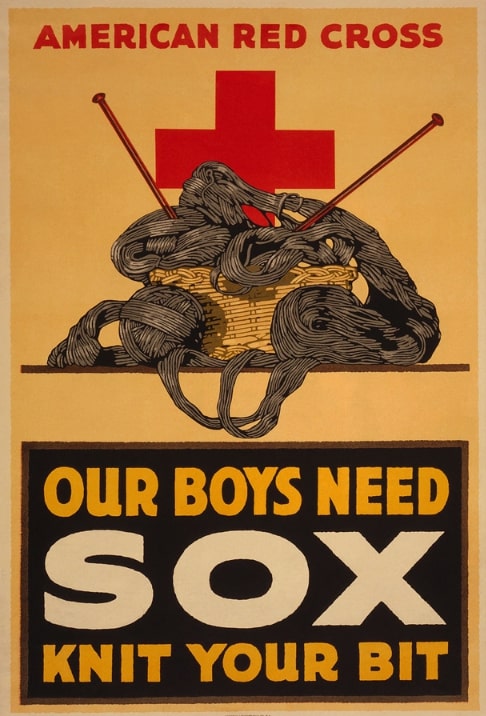
The schools had knitting bees, public parks hosted knit-a-thons, and charities held fundraisers for yarn and supplies.
Prisoners across America were knitting up a storm of comfort for the boys on the front.
The American Red Cross created a manual, “American Red Cross: Instructions for Knitting Sweaters, Mufflers, Helmets, Socks, Wristlets, Wash-cloths, Bottle-covers.”
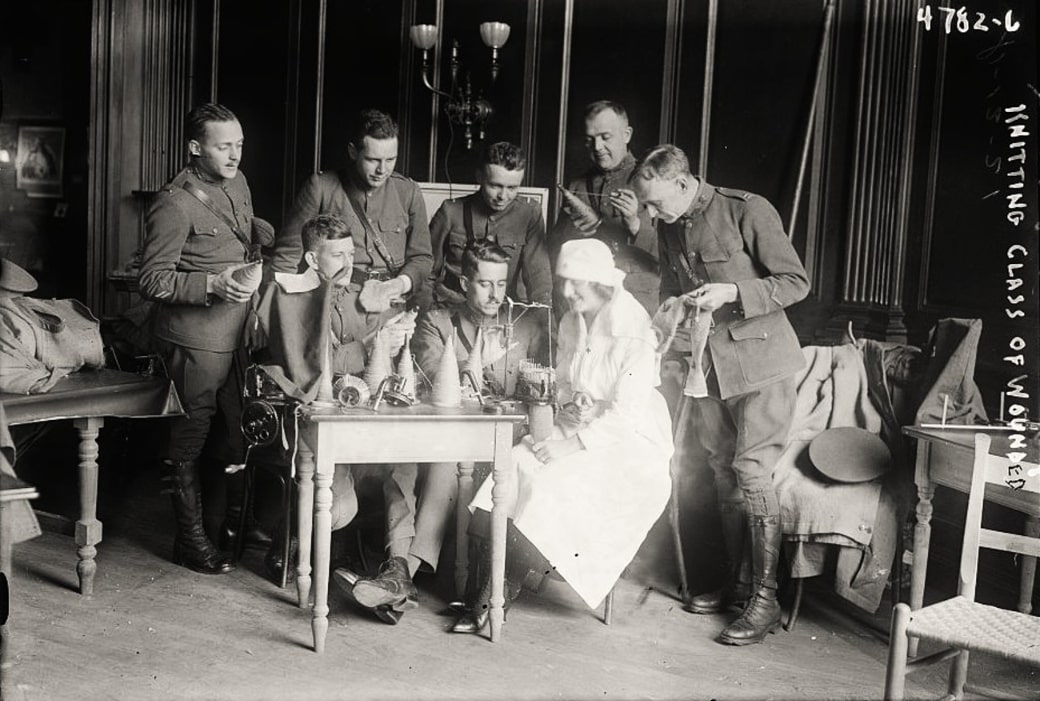
Convalescing soldiers learned the skill from the Red Cross. Below is a photograph showing one nurse teaching soldiers how to knit at Lafayette House, a convalescent home for veteran soldiers and sailors at 112 West 59th Street, Central Park South, New York City, New York.
Patriot Spinners & Knitters: WWI Christmas Packages for the Troops
Mrs. Chris “Anna” White, “America’s Champion Red Cross Helper,” made headlines. Her contribution to keeping Uncle Sam’s boys warm on the front created a buzz! The 70-year-old patriotic pioneer’s message to America: “Learn to Spin!” to serve in the war effort.
Anna knitted sweaters, helmets, socks, and scarves from the wool of her own sheep, which she sheared, carded, and spun by her own hands. She sent all her work to the Minneapolis Red Cross Headquarters.
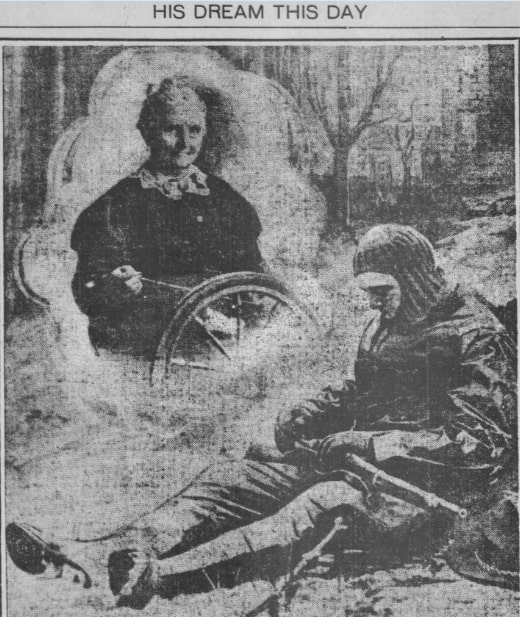
The photo caption reads:
The photograph of this American soldier was made “Somewhere in France” where he now is fighting for America. It was cold and snowing that day when the boy was taking a brief nap during a rest interval, comfortable in warm helmet, gloves and other things made by Red Cross workers over here, one of whom is Mrs. Chris White. Her picture at her spinning wheel is shown.
Mrs. White had some competition…
Birmingham Postman-Knitter
Postman Howard E. Jones set aside his ego and masculine ideals and knitted for the soldiers. He claims:
“If by knitting we can aid our nation to victory, then every last one of us will get a set of knitting needles and a ball of wool today…”
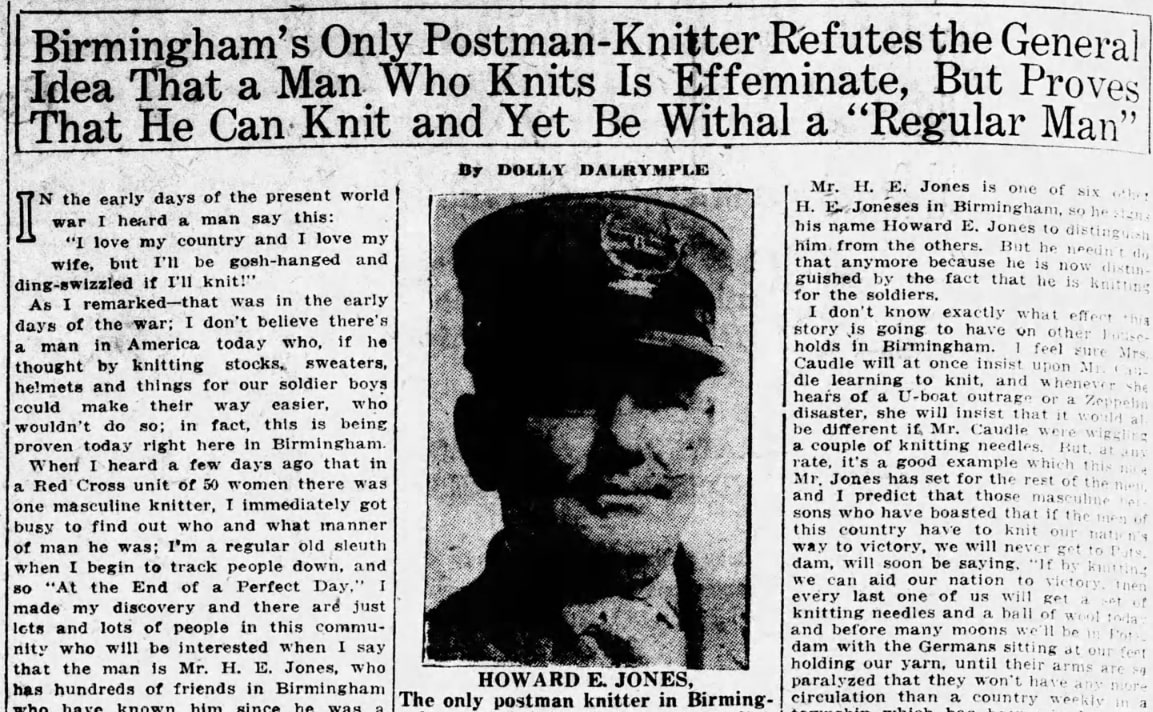
The author of this article, Dolly Dalrymple, writes:
“I don’t believe there’s a man in American today who, if he thought by knitting socks, sweaters, helmets, and things for our soldier boys [he] could make their way easier, who wouldn’t do so; in fact, this is being proven today right here in Birmingham.”
Also check out Civil War veteran Edwin Newell Armstrong, who became a champion knitter for the war effort.
Convicts Knitting for Soldiers in State Penitentiary
Society women of Canon City, Colorado, showed convicts how to knit to help the soldiers.
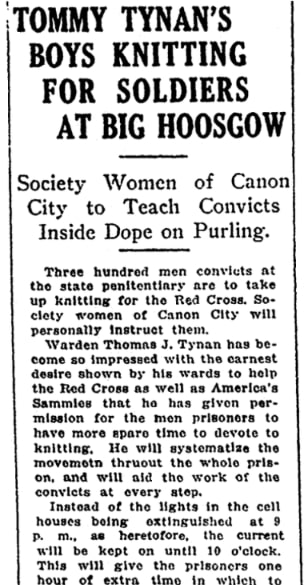
This article reports:
Three hundred men convicts at the state penitentiary are to take up knitting for the Red Cross. Society women of Canon City will personally instruct them.
Warden Thomas J. Tynan has become so impressed with the earnest desire shown by his wards to help the Red Cross as well as America’s Sammies that he has given permission for the men prisoners to have more spare time to devote to knitting. He will systemize the movements throughout the whole prison and will aid the work of the convicts at every step.
Other Known Knitters Photographed
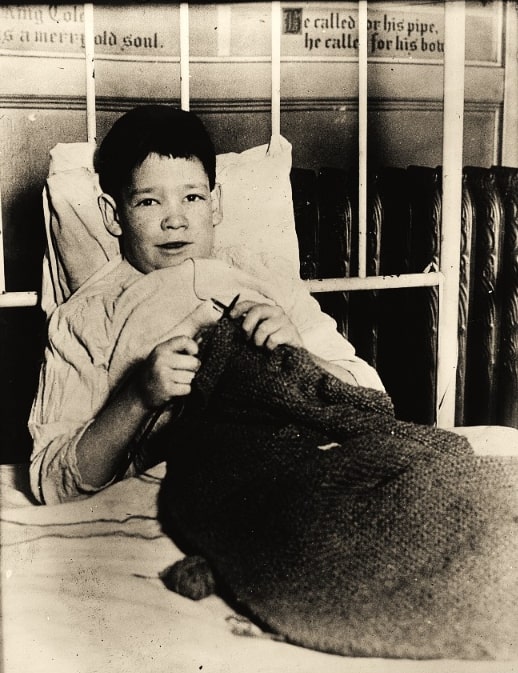
Below is a real American! This boy, John Finnegan, handicapped and in a children’s home, knits for the soldiers.
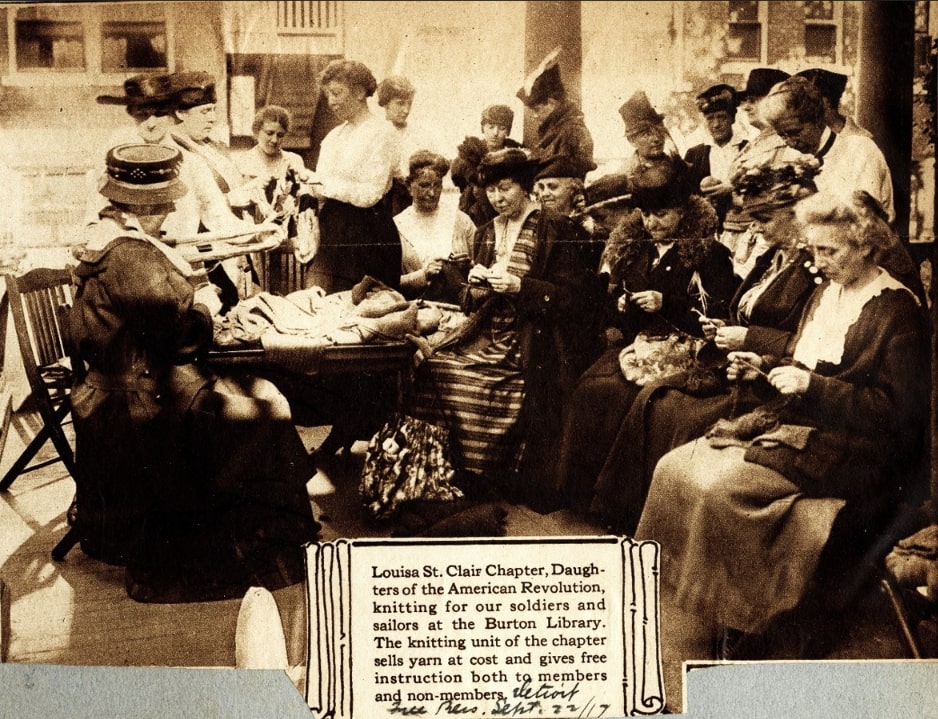
Weekly chapter meetings at the National Society Daughters of the American Revolution (NSDAR) became weekly knitting bees as they made socks, sweaters, hats, and gloves for American soldiers and sailors.
Below is a photo of the Louisa St. Clair Chapter, NSDAR, Grosse Pointe, Michigan, knitting for soldiers. This photo was originally published in the Detroit Free Press on 22 September 1917.
Even Firemen Knitting for Soldiers!
Here are two photos of firemen picking up the needle in Rome, New York, and Honolulu, Hawaii.
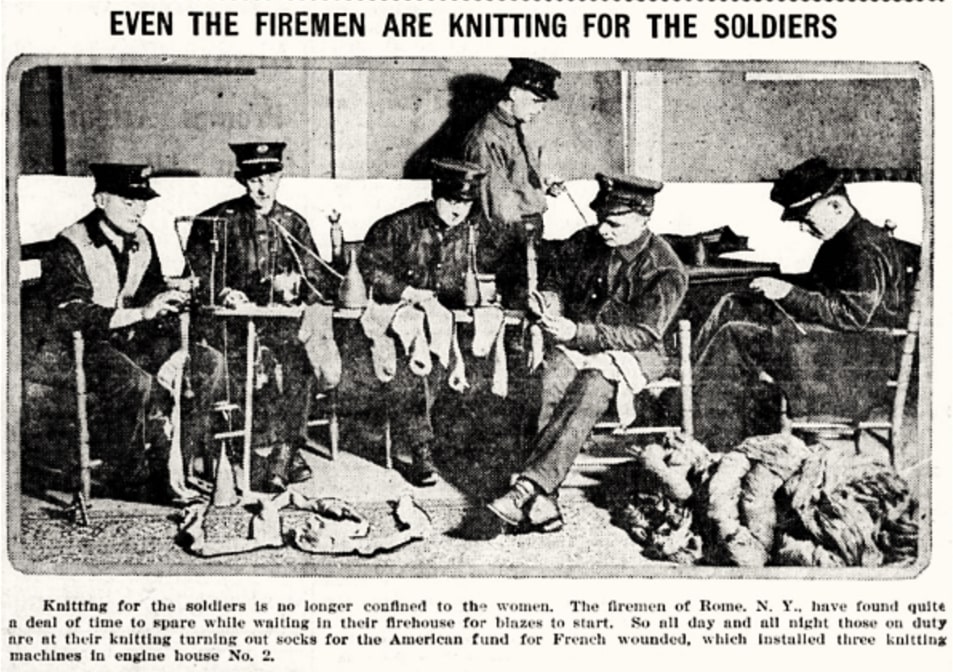
This photo caption reads:
Knitting for the soldiers is no longer confined to the women. The firemen of Rome, N. Y., have found quite a deal of time to spare while waiting in their firehouse for blazes to start. So all day and all night those on duty are at their knitting turning out socks for the American Fund for French Wounded, which installed three knitting machines in engine house No. 2.
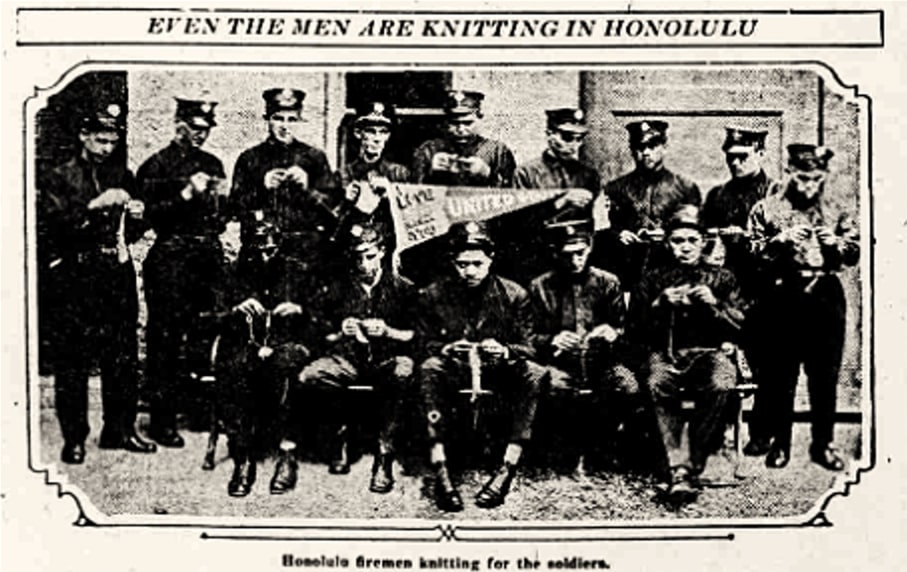
The photo caption reads:
Honolulu firemen knitting for the soldiers.
Knitting for the soldiers seems to have achieved an even greater vogue in Hawaii than here. The men as well as the women are knitting, and they carry their needles and wool on the street cars without the least hesitation. A great deal of competition in knitting has been stirred up between the firemen and chauffeurs of Honolulu who endeavor to surpass each other in turning out the most work and the neatest. One of the men in the photo above – quite a few of whom are native Hawaiians – is so clever he can make a muffler in three hours.
The Soldiers’ Santa Claus
And how did all these knitted items make their way to the soldiers? Below is a clue.
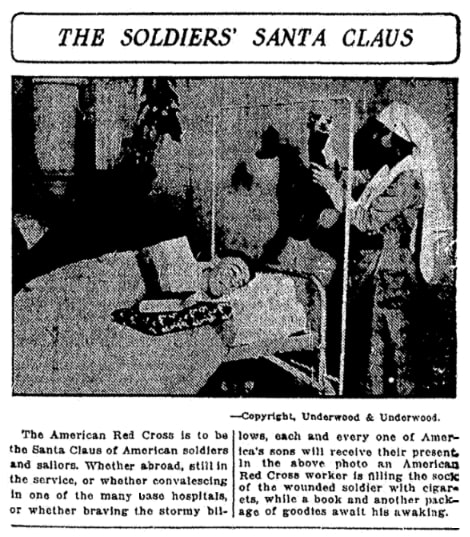
The photo caption reads:
The American Red Cross is to be the Santa Claus of American soldiers and sailors. Whether abroad, still in the service, or whether convalescing in one of the many base hospitals, or whether braving the stormy billows, each and every one of America’s sons will receive their present. In the above photo an American Red Cross worker is filling the sock of the wounded soldier with cigarettes, while a book and another package of goodies await his awaking.
Merry Christmas!!!
Create a free account at GenealogyBank for 7 days to start your journey and discover the stories your ancestors left behind.
Note on the header image: Red Cross nurse plays Santa Claus to a wounded soldier. Credit: Underwood & Underwood; American National Red Cross Archives.
Related Articles:
