
 July 21, 2025
Introduction: In this article, Gena Philibert-Ortega glanced down at the sidewalk – and stepped right into an interesting research project. Gena is a genealogist and author of the book “From the Family Kitchen.”
History is all around us. To find it you must closely observe your surroundings. Last week I drove to a nearby city to go to a bookstore. After parking the car, I walked a few blocks to the bookstore and as I walked, I casually looked down and saw this, a 1941 remnant of the Work Projects Administration (WPA):
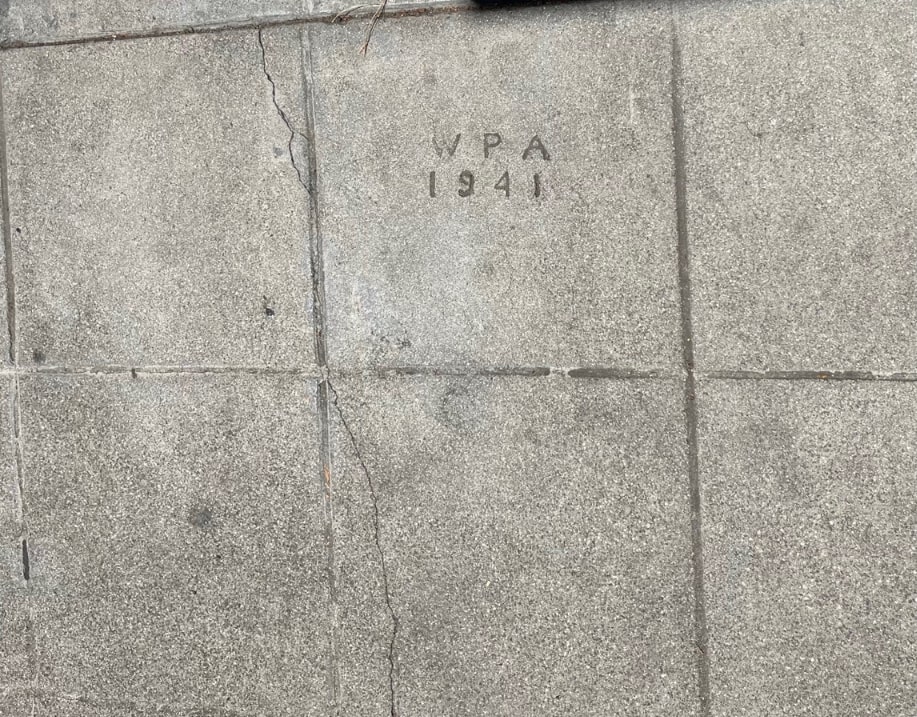
I enjoy WPA history, so I was excited to find this and to be honest I don’t remember seeing any other sidewalk markings like it (but then again, I’m not sure I’m always looking at the ground as I walk). I knew they existed; I just hadn’t found one before.
The WPA
That stamp “WPA 1941” provides historical context for that stretch of sidewalk. That marking tells us that the sidewalk was laid down by the Work Projects Administration (formerly known as the Works Progress Administration) in 1941.
The Works Progress Administration (WPA; from 1935 to 1939, then known as the Work Projects Administration from 1939 to 1943) was an American New Deal agency that employed millions of jobseekers (mostly men who were not formally educated) to carry out public works projects, including the construction of public buildings and roads. It was set up on May 6, 1935, by presidential [President Franklin D. Roosevelt] order, as a key part of the Second New Deal. (1)
This is a narrow definition of what the WPA actually did, but since we are looking at a public works project for this article, we will go with this definition.
In actuality, the WPA worked on many projects that helped communities, both infrastructure, historical, and artistic. Evidence of their work is all around us. You might live in a community where the local school was built by the WPA or a mural was painted for the post office. I’ve been to cemeteries where the perimeter fencing was built by the WPA. My nephew will attend a college where the WPA helped with building projects and painted murals.
The New Deal in Your Town
Interested in learning about the WPA’s legacies where you or your ancestors lived? One place to look for information about art, public works, and more is the website for the Living New Deal.

By clicking the Search button you can search by location, typing in a city or browsing by a state. I typed in Riverside and then chose Riverside, California, to reveal some of the WPA projects documented for Riverside.
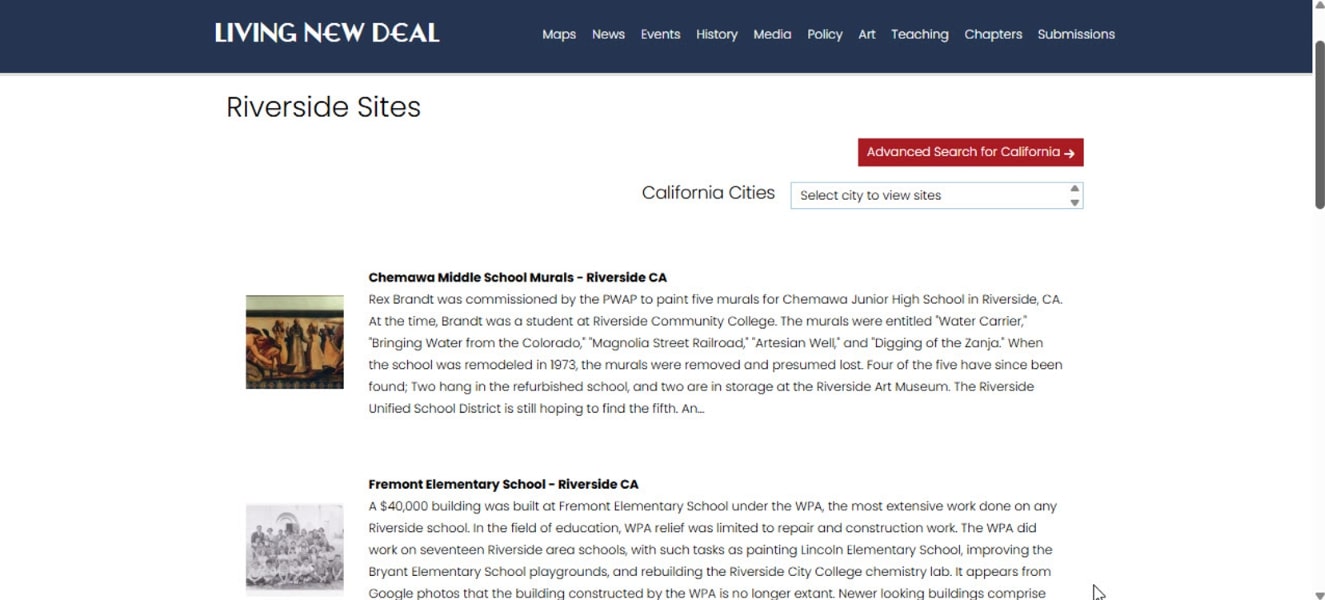
Murals, road improvements, a statue, and building projects were documented here – but not the sidewalk I found. This website relies on volunteers, so this is my opportunity to share what I found so that it is available to others. For more information see the site’s Submissions and Research page.
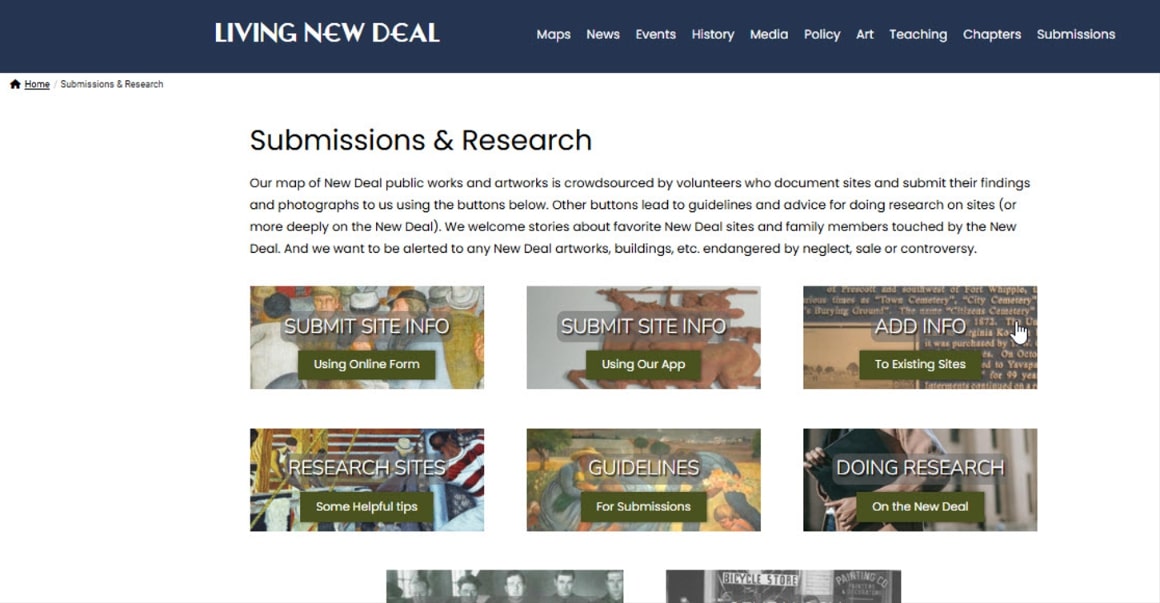
The sidewalk I found stamped with the WPA isn’t an anomaly. According to one website, the WPA built 24,000 miles of sidewalks! (2) By searching on the term “WPA sidewalks” you can find other articles and even photos of sidewalk projects. In addition, the Living New Deal website has a website search that can be used to search on the term “sidewalk” or even the state +sidewalk (California sidewalk) to find other examples.
Searching Historical Newspapers
Searching for the term “sidewalk” in the first name box on GenealogyBank’s search page and then adding the keyword “WPA,” the year 1941, and finally narrowing my results to Riverside, California, I was able to find historical newspaper articles that referenced the WPA and various road construction projects.
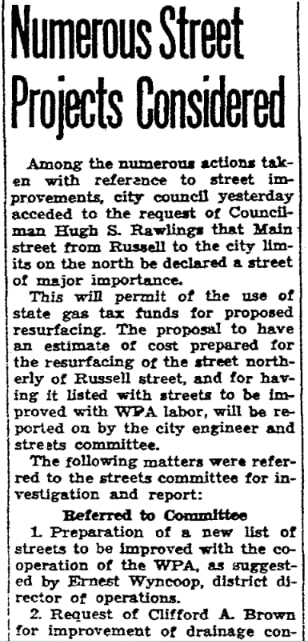
After this search I realized that most likely the work was approved or discussed in 1940, so I re-ran my search and narrowed it to 1940 hoping to find a mention of it.
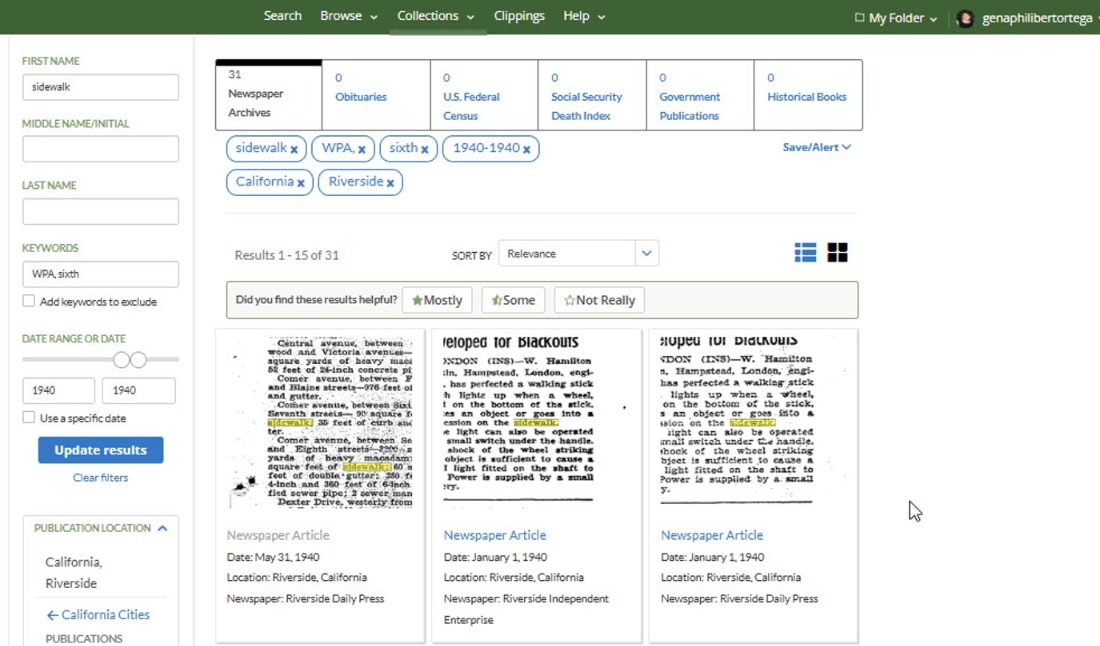
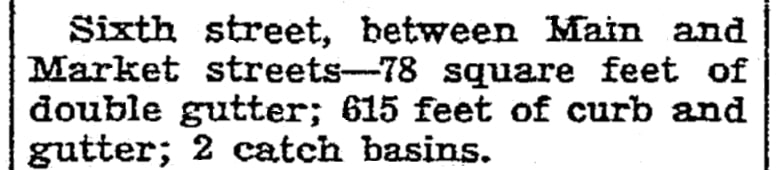
That search led me to a newspaper article that mentioned the sidewalk I had taken the photo of: Sixth Street between Main and Market.
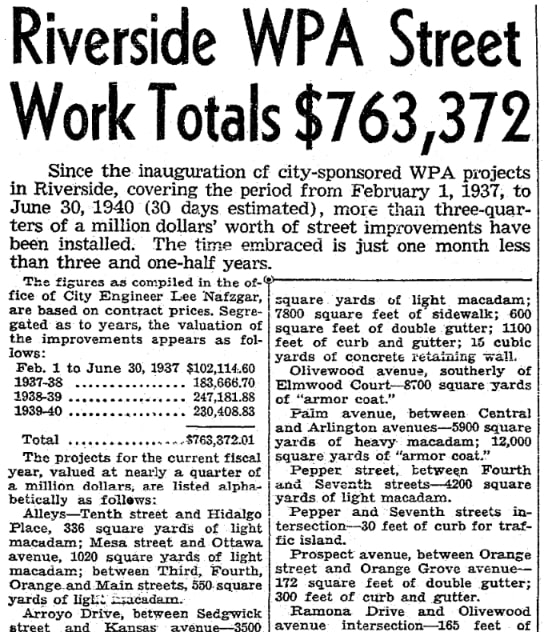
It didn’t take me long to find exactly what I was looking for in this article:
This newspaper article states that the projects for that fiscal year in Riverside would total a quarter of a million dollars and in all totaled over $763,372. Now I know a little more about the historical context of that stretch of sidewalk I photographed.
Why Care About a Sidewalk?
The WPA and its work is part of our American family’s history whether they benefitted from the projects or worked for the WPA. In addition, the WPA’s Historical Survey helped to gather information that we as genealogists use today, including cemetery transcriptions and archive surveys. That WPA stamp on the sidewalk reminds us of a time when the government put its citizens back to work helping their communities in a variety of ways.
How did the WPA impact your family’s life?
Create a free account at GenealogyBank for 7 days to start your genealogy journey and discover the stories your ancestors left behind.
Note on the header image: “Works Progress Administration Project 1937” sign on the City Hall in Stewartville, Minnesota. Credit: Jonathunder; Wikimedia Commons.
___________________
(1) “Works Progress Administration,” Wikipedia: https://en.wikipedia.org/wiki/Works_Progress_Administration
(2) “WPA,” American Radioworks Bridge to Somewhere https://americanradioworks.publicradio.org/features/infrastructure/b1.html_
