
 September 28, 2026
Introduction: In this article – to help celebrate National Hispanic Heritage Month – Gena Philibert-Ortega provides tips and links for Hispanic genealogy. Gena is a genealogist and author of the book “From the Family Kitchen.”
You’ve probably heard presentations where professional genealogists say, “not everything is online!” While that is definitely true, what’s online can help us until we are able to travel to research in libraries and archives or pay for records to be searched and copied.
This month (September 15-October 15) is National Hispanic Heritage Month, recognizing the cultures and contributions of both Hispanic and Latino Americans, and it’s a good time to look into what is found online in addition to the usual places we search, such as FamilySearch. The following three online repositories are examples of what can be found, but they may not be specifically appropriate for your research. They are meant to inspire you to look at online locations that focus on your research area.
National Resources: Library of Congress
In some cases, you’ll want to look at non-genealogy-focused digital collections to better understand a time and location. These collections can also provide you with historical context for researching your ancestor. The Library of Congress’ Hispanic Reading Room has a few collections that might be of interest to you, including:
- East Florida Papers, which focus on materials from 1784-1821;
- Handbook of Latin America Studies, which “provides searchable access to bibliographic citations and descriptive annotations of works about Latin America, including books, journal articles, conference proceedings and papers, book chapters, maps and atlases, and digital resources (blogs, websites, online videos, etc.)”; and
- Puerto Rico at the Dawn of the Modern Age: Nineteenth- and Early-Twentieth-Century Perspectives, which includes “historically important writings by prominent Puerto Rican political activists and historians dating from approximately seventy years before the Spanish-American War (1831) until some thirty years after it (1929).” Each collection includes an “About” section as well as access to the digitized materials.
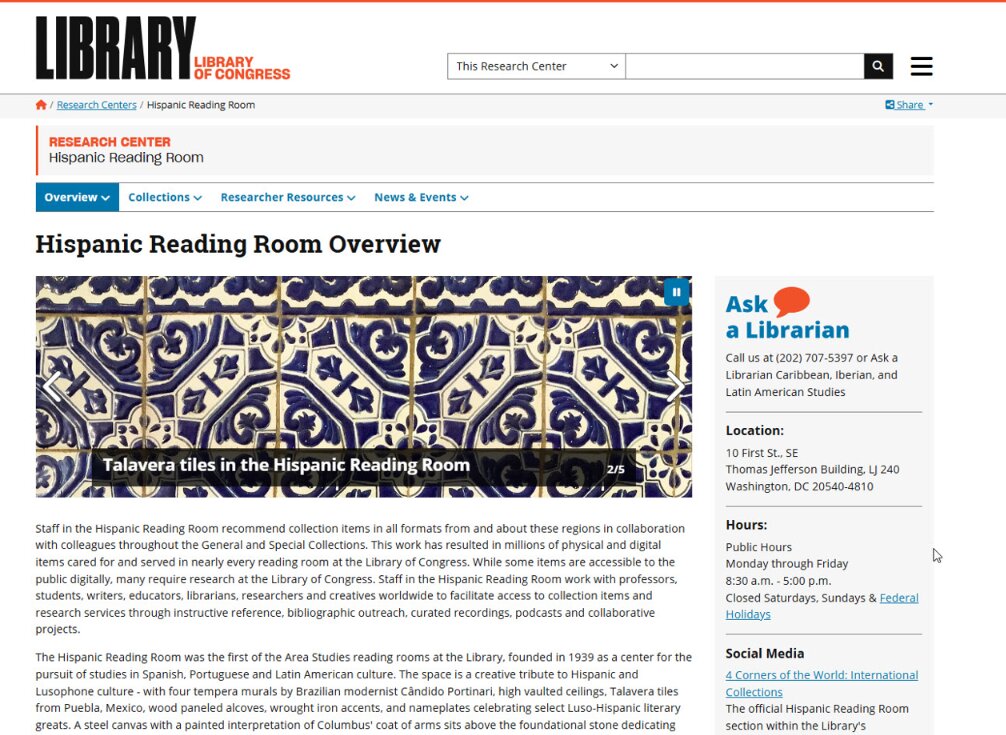
The Library of Congress has a specific Ask a Librarian feature for Caribbean, Iberian, and Latin American Studies. They explain:
We provide basic research assistance related to those parts of the world encompassing the geographical areas of the Caribbean, Latin America, Spain, and Portugal; the indigenous cultures of those areas; and peoples throughout the world historically influenced by Luso-Hispanic heritage, including Latinx communities in the U.S., and peoples of Portuguese or Spanish heritage in Africa, Asia, and Oceania. We will provide a response to your question within 5 business days.
This is not a genealogical helpline, but they can give suggestions for resources that have to do with overall research.
Next Steps
Don’t forget to look at the NARA (National Archives) website for other records or instructions for obtaining records, including military or immigration records. For those tracing their ancestors to their homeland, consult that country’s national library or archive.
Libraries: Houston (Texas) Public Library
Always check the resources for the location you are researching. This includes public and academic libraries and archives. A good example of what can be found at a library are the Hispanic Digital Collections at the Houston Public Library:
This special collection includes over 100 collections of papers and photographs representing the contributions of Hispanics in every industry and their experience in the Bayou City. These archival records, coupled with first-hand accounts captured via oral history, offer a rich account of the Hispanic experience in Houston.
Materials range in date from 1703 to the present, with the bulk of the material covering the 1920s through the 1980s. Within these collections are a significant number of materials about: early Houston mutualistas (mutual aid societies); big band, Tejano, and Chicano music; the Mexican American experience during World War II; and the League of United Latin American Citizens (LULAC).
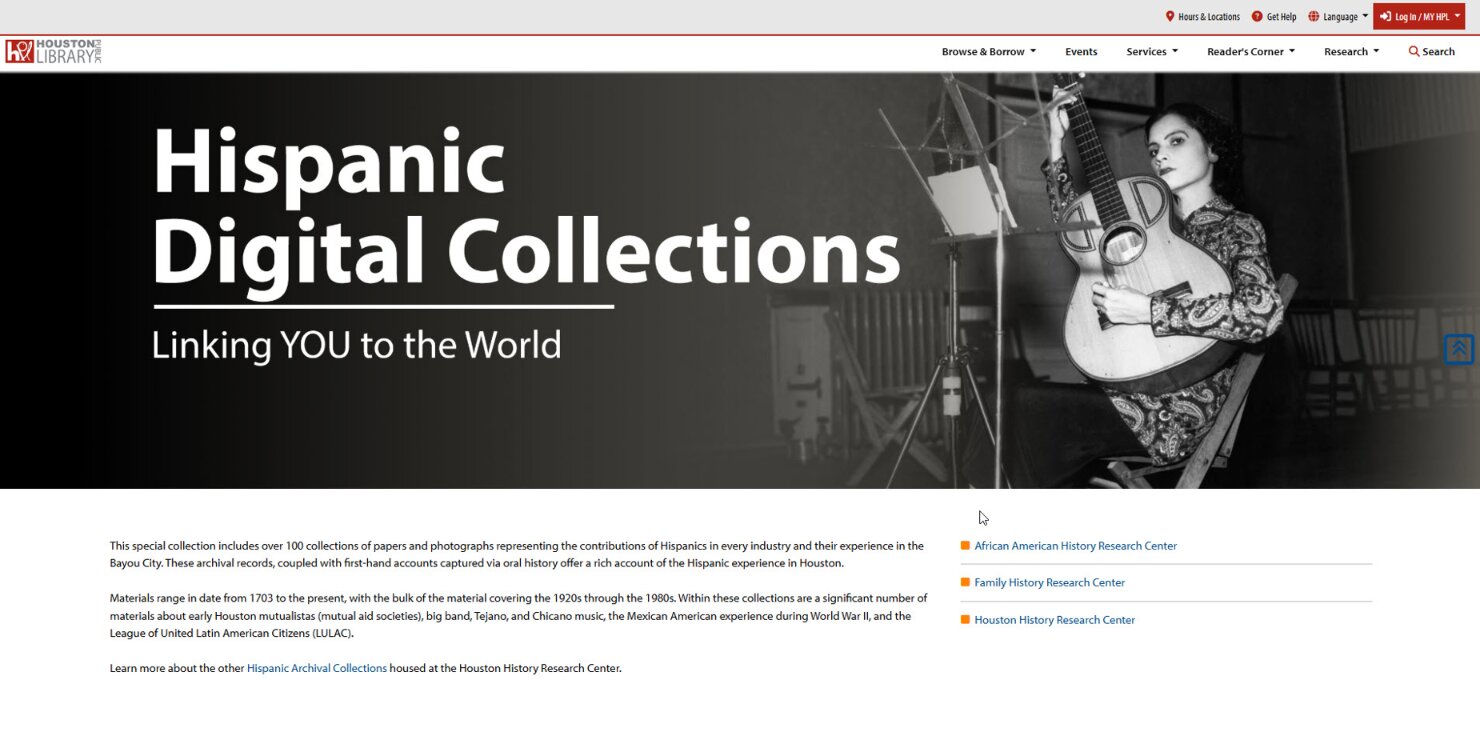
This is a great collection for those with Houston-area ancestors, including census records, interviews, family papers, and photographs. Remember that as you research, delving into the collections of someone else’s family can reveal your family. You may not know everyone who is part of your ancestor’s FAN Club (Friends, Associates, and Neighbors).
Next Step
What libraries exist where your family lived? Even a small public library might have resources. Take a look at that library and then a nearby large city library for possible archives. An academic library should also be consulted for resources on the historical community your ancestors lived in.
Societies: Puerto Rican Genealogy
Genealogy societies should be one of your first places to go for information. Aside from your local society, consider a society that specializes in the research you are conducting. Examples include Genealogical Society of Hispanic America, Cuban Genealogy Club of Miami Florida, Inc., and Puerto Rican Genealogy. Membership in a genealogy society has its benefits – aside from the education provided via meetings, webinars, and conferences – as databases, indexes, and other resources are available to help members research their families.
One example of this is Puerto Rican Genealogy, whose Tools page includes a database of funeral cards from Rincón. They also provide resources found on other websites.
Next Step
What genealogical and historical societies exist that can help you with your research? It’s time to “find your people” and see who is researching the same places and topics you are. You can find this by searching on your favorite search engine or asking around. Go to society meetings, conferences or webinars. Seek out presenters speaking on topics that are of interest. Ask them what you should join.
Make a Plan NOW
Make a plan for your research now and see what is online that can help you tell the story of your ancestors’ lives. Add historical newspapers to that research plan. GenealogyBank includes Spanish-language newspapers published in the United States beginning in the 19th century.
Create a free account at GenealogyBank for 7 days to start your journey and discover the stories your ancestors left behind.
Note on the header image: Naval Medical Center Portsmouth hosting a Hispanic Heritage Month celebration, 23 September 2020. Credit: Dylan M. Kinee; U.S. Navy; Wikimedia Commons.
