
 September 23, 2026
Introduction: In this article, Melissa Davenport Berry offers yet more photos, history and genealogy about the two federally recognized Wampanoag Tribes. Melissa is a genealogist who has a website, americana-archives.com, and a Facebook group, New England Family Genealogy and History.
Today I continue to look at some of the history of the Wampanoag Tribes of Mashpee and Gay Head (Aquinnah) with some AI enhanced photo features gathered from newspaper clips and archives.
The Wampanoag, the “People of the First Light,” are comprised of two federally recognized tribes: the Mashpee Wampanoag Tribe located in Mashpee, Massachusetts; and the Wampanoag Tribe of Gay Head (Aquinnah) located on Martha’s Vineyard, Massachusetts. Their people have inhabited this land for 12,000 years.
My three subjects today are the married couple Mannanata and Mantasikaun, and Mannanata’s mother Minowanin. Their photo was published in a newspaper clip from 1927.
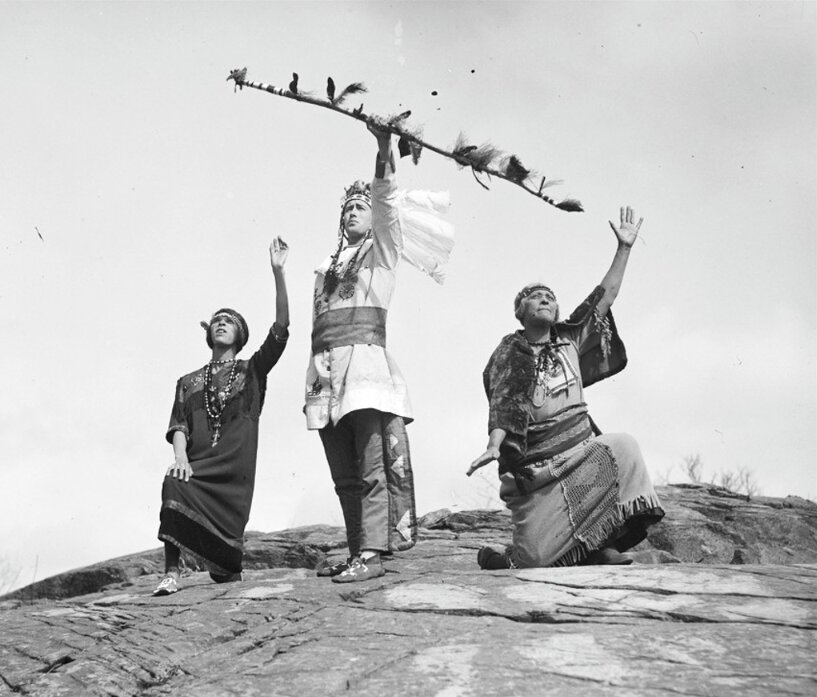
The photo caption for this picture reads:
Worshipping Manitou [the Great Spirit, or supreme creator being, in several Native American traditions is the sacred power that flows through all things in nature, including animals, plants, rocks, and weather]
Three Indians of New England have been found who still adhere to the faith of their fathers. They are members of the Mashpee Tribe, and reside at Middleboro, Mass. Left to right: Mannanata, Mantasikaun, and Minowanin [aka Minaewanee and various spellings; means “Still Water”].
I found this photo from the above news clip as well as others on the Digital Commonwealth site in the Leslie Jones Collection from the Boston Public Library.
In History of Plymouth, Norfolk and Barnstable Counties, Massachusetts, Volume 2, Elroy Sherman Thompson cites the following history on these three Indians:
Princess Minowanin is a daughter of Princess Krischani, Mashpee Indian, and William Manuel, Ponkapoag medicine man.
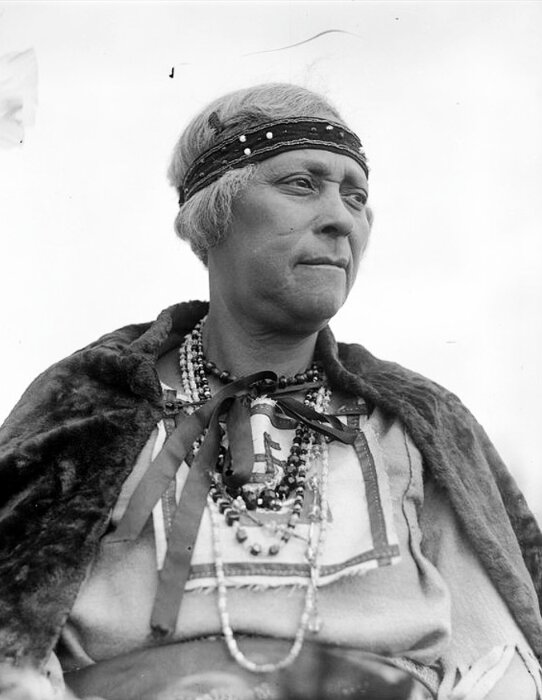
Princess Krischani, or Mrs. Lucretia (Scott) Manuel, was born in Plymouth, Massachusetts, at South Ponds. Her father Warren Scott and her mother Hannah (Leonard) Scott were Indian residents of Plymouth.
Princess Minowanin, a talented actress and singer, went on the stage when she was 21 years of age. After 12 years of stage life, she moved to Lakeville, Massachusetts, because of ill health.
Mantasikaun is a descendant of the Nauset Tribe, who lived on Cape Cod, and the son of a Mashpee Indian.
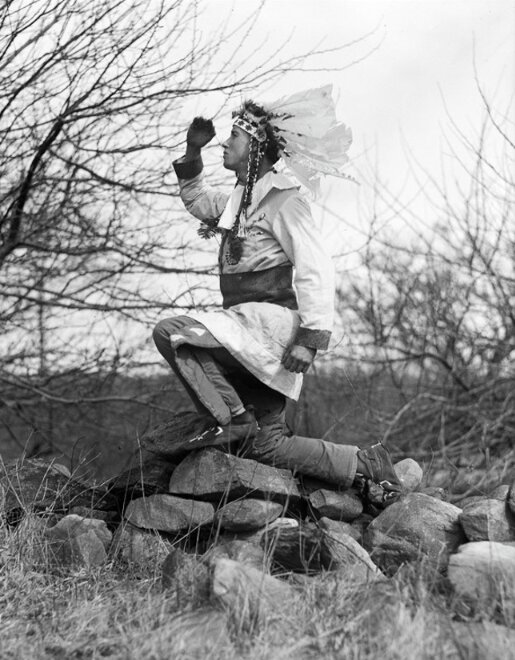
Mantasikaun’s mother was a white woman. He was the last of the Mashpee Indian medicine men, with a knowledge of roots, herbs, barks, berries, and flowers for medicinal purposes. He was also a historian, especially interested in matters pertaining to his people, with a thorough knowledge of the history of the Mashpee Tribe.
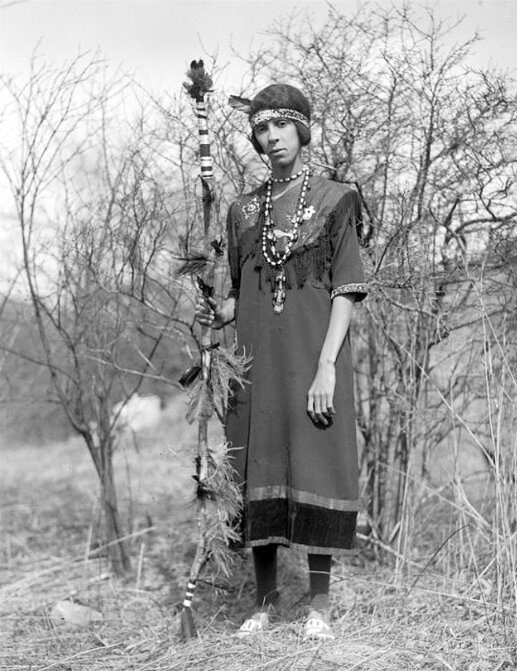
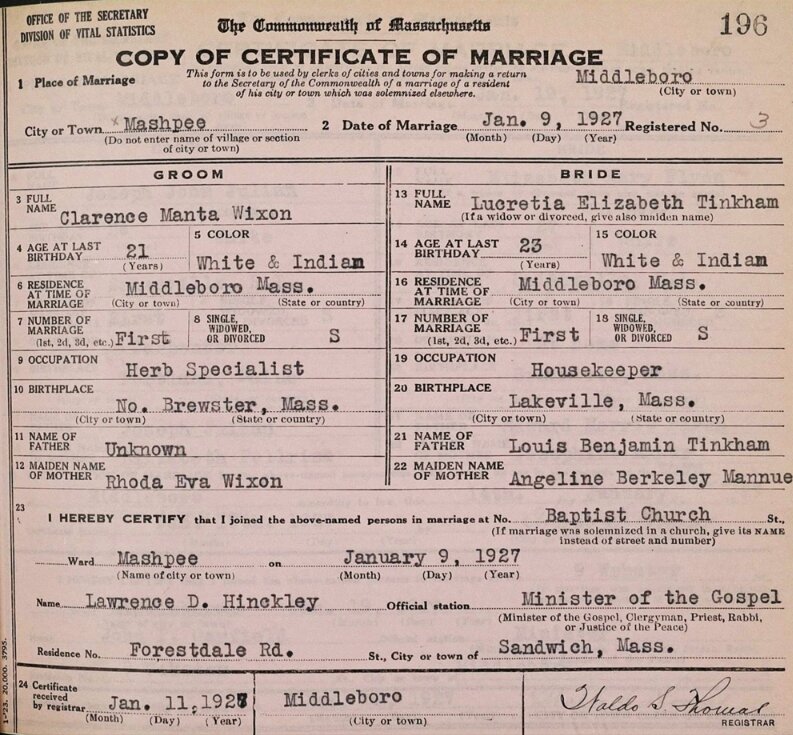
Princess Minowanin of the Mashpees gave her daughter Mannanata in marriage to Mantasikaun on 9 January 1927.
Below is an image of the couple’s marriage record from the archives, which lists the groom Mantasikaun as Clarence Manta Wixon, age 21, born in Brewster, Massachusetts, and the son of Rhoda Eva Wixon and an unknown father. Rhoda was born to Jeremiah Russell Wixon (1846-1924), son of Job Wixon and Elizabeth (Newcomb) Wixon, and Betsey Freeman (Murphy) Wixon.
The bride Mannanata is listed as Lucretia Tinkham, a housekeeper in Lakeville, Massachusetts, and the daughter of Louis Benjamin Tinkham and Angeline Berkeley (Mannue/Manuel) Tinkham.
I found Clarence in the 1920 census living with his mother Rhoda and his maternal grandfather Jeremiah Russel Wixon and wife Betsey.
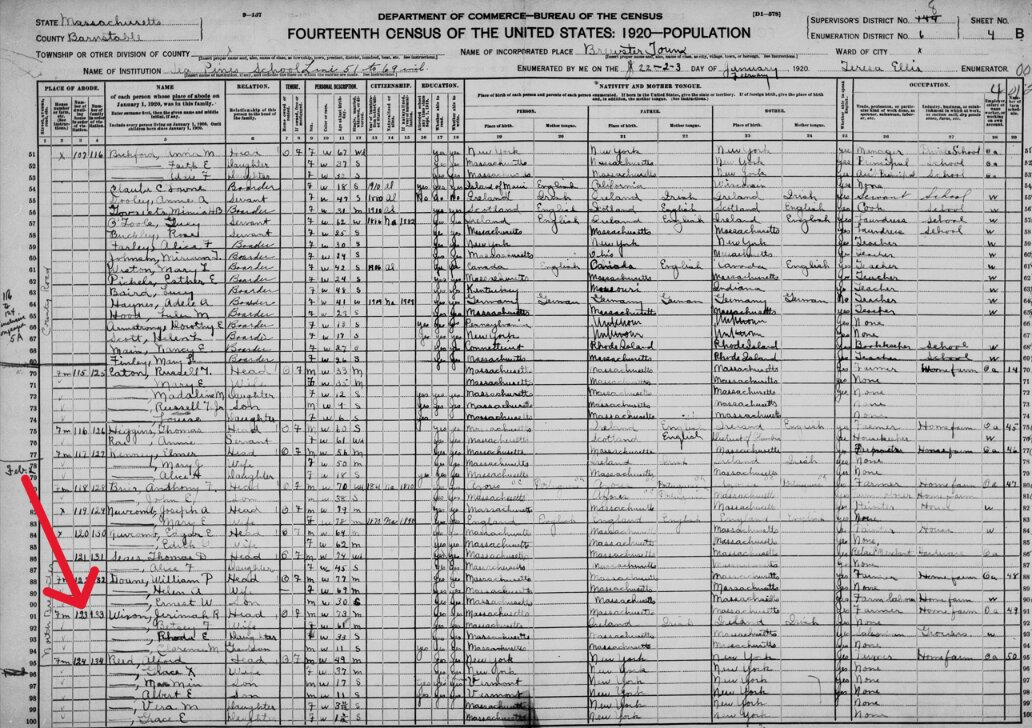
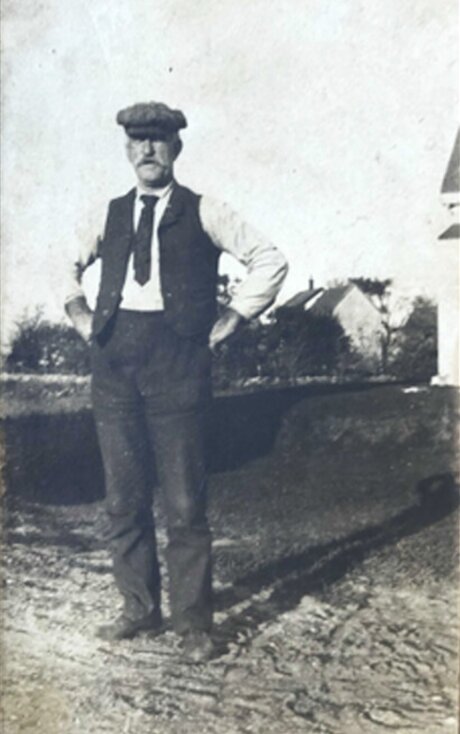
Jeremiah married 1st Rhoda Robbins, daughter of William and Fannie Robbins, in 1863. She died in 1880. He married 2nd Betsey Freeman Murphy on 4 December 1881.
Here is a newsclip from the archives on the wedding announcement that furnishes more information.
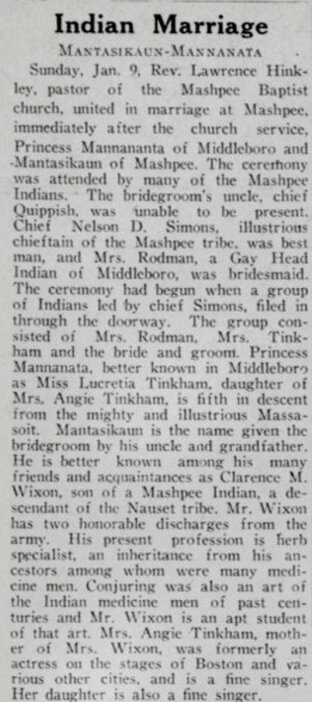
This announcement reads:
Sunday, Jan. 9, Rev. Lawrence Hinkley, pastor of the Mashpee Baptist Church, united in marriage at Mashpee, immediately after the church service, Princess Mannananta of Middleboro and Mantasikaun of Mashpee.
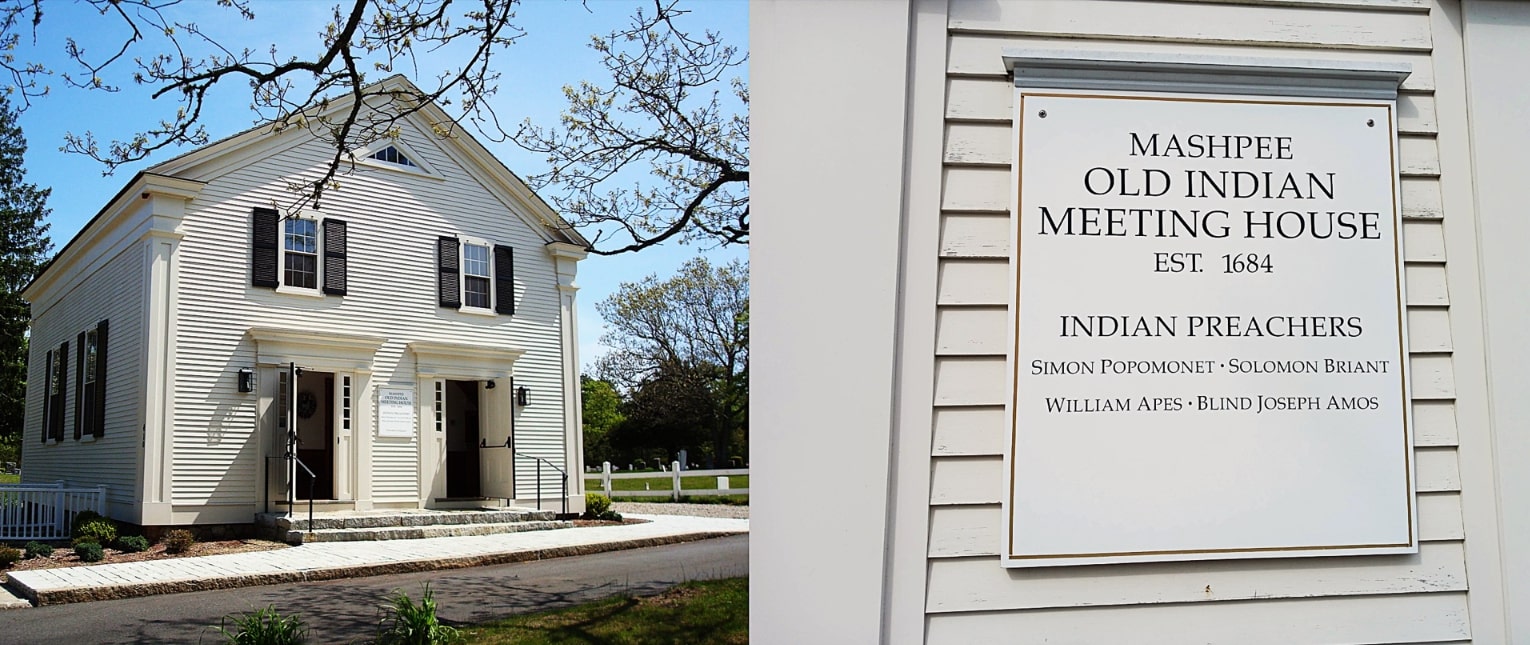
The ceremony was attended by many of the Mashpee Indians. The bridegroom’s uncle, Chief [Eben] Quippish, was unable to be present.
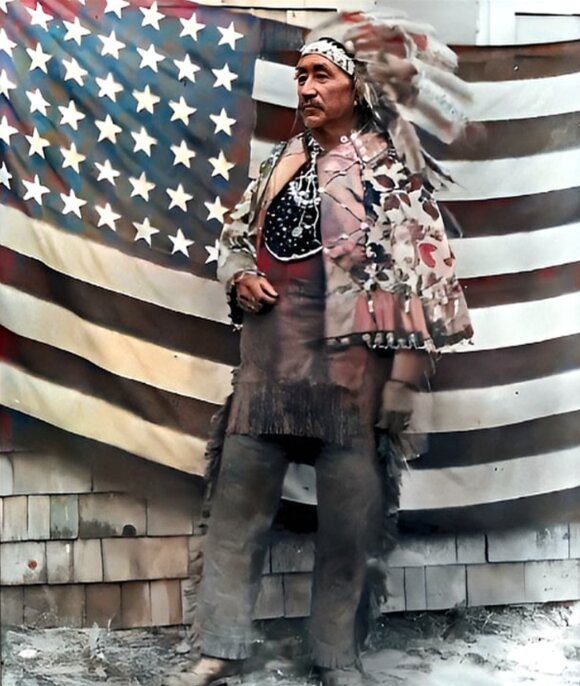
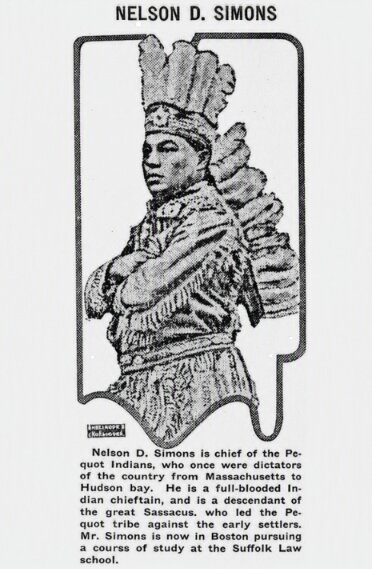
Chief Nelson D. Simons, illustrious chieftain of the Mashpee Tribe, was best man, and Mrs. Rodman, a Gay Head Indian of Middleboro, was bridesmaid. The ceremony had begun when a group of Indians led by Chief Simons filed in through the doorway.
The group consisted of Mrs. Rodman, Mrs. Tinkham, and the bride and groom. Princess Mannanata, better known in Middleboro as Miss Lucretia Tinkham, daughter of Mrs. Angie Tinkham, is fifth in descent from the mighty and illustrious Massasoit.
Mantasikaun is the name given [to] the bridegroom by his uncle and grandfather. He is better known among his many friends and acquaintances as Clarence M. Wixon, son of a Mashpee Indian, a descendant of the Nauset tribe.
Mr. Wixon has two honorable discharges from the army. His present profession is herb specialist, an inheritance from his ancestors among whom were many medicine men. Conjuring was also an art of the Indian medicine men of past centuries, and Mr. Wixon is an apt student of that art.
Mrs. Angie Tinkham, mother of Mrs. Wixon, was formerly an actress on the stages of Boston and various other cities, and is a fine singer. Her daughter is also a fine singer.
Here is a photo of Angeline Berkeley (Mannue/Manuel) Tinkham, aka Minowanin, in her later years.
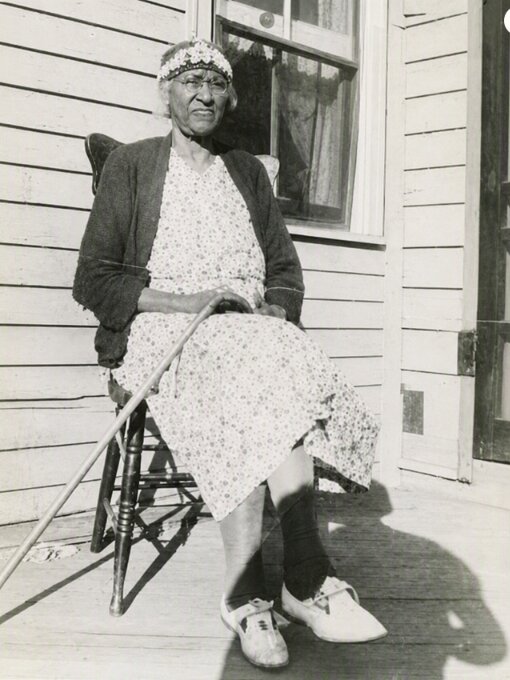
Note: Not all these names appear in the 1860 Indian Census Records, or the Earle Report, and I am not able to validate all lineage claims to Massasoit.
I will keep researching more on these lines.
Explore your family history by creating your free account at GenealogyBank for 7 days, because every life deserves to be remembered, recorded, and rediscovered.
Note on the header image: Ousamequin, or “Massasoit” (Wampanoag term for “Great Sachem”) and Governor John Carver smoking a ceremonial pipe at Plymouth Colony in 1621. Credit: Sutro Library; Wikimedia Commons.
Related Articles:
- Mayflower Descendants & the Mashpee Wampanoag Tribe (part 1)
- Mayflower Descendants & the Mashpee Wampanoag Tribe (part 2)
- Mayflower Descendants & the Mashpee Wampanoag Tribe (part 3)
- Mayflower Descendants & the Mashpee Wampanoag Tribe (part 4)
- Mayflower Descendants & the Mashpee Wampanoag Tribe (part 5)
- Mayflower Descendants & the Mashpee Wampanoag Tribe (part 6)
- Mayflower Descendants & the Mashpee Wampanoag Tribe (part 7)
- Mayflower Descendants & the Mashpee Wampanoag Tribe (part 9)
- Mayflower Descendants & the Mashpee Wampanoag Tribe (part 12)
- 1928 Great Wampanoag Powwow (part 1)
- 1928 Great Wampanoag Powwow (part 2)
- Mashpee Wampanoag Tribe in the Crocker Ledger Book (part 1)
- Photos from the Past: Mashpee Wampanoag Tribe
- Photos from the Past: Wampanoag Tribes of Mashpee and Gay Head (Aquinnah) (part 1)
- Photos from the Past: Wampanoag Tribes of Mashpee and Gay Head (Aquinnah) (part 2)
- Photos from the Past: Wampanoag Tribes of Mashpee and Gay Head (Aquinnah) (part 3)
- Photos from the Past: Wampanoag Tribes of Mashpee and Gay Head (Aquinnah) (part 4)
- Photos from the Past: Wampanoag Tribes of Mashpee and Gay Head (Aquinnah) (part 5)
- Photos from the Past: Wampanoag Tribes of Mashpee and Gay Head (Aquinnah) (part 6)
- Photos from the Past: Wampanoag Tribes of Mashpee and Gay Head (Aquinnah) (part 7)
