
 October 29, 2026
Introduction: In this article – to celebrate National Cookbook Month in October – Gena Philibert-Ortega provides a template for writing down your favorite recipes to pass on your family’s food traditions. Gena is a genealogist and author of the book “From the Family Kitchen.”
October is National Cookbook Month and it’s a good time to consider compiling a family cookbook – or at least share a few family favorite recipes so that those food traditions can continue for generations.
Recipe writing may seem like an easy task, but like most kinds of writing, there are rules and formats that make the result easier to follow for your reader/cook. As you consider what recipes to pass down, take note of the following format to make it a recipe that your family can follow and will use.
Recipe Template
If you’ve ever looked at recipes in older cookbooks you may have noticed that they look different than those that are published in modern-day books. Today’s cookbooks include recipes designed to make acquiring and cooking the ingredients easier. Most cookbooks today include recipes that utilize the following components.
According to Dianne Jacob’s Will Write for Food: Pursue Your Passion and Bring Home the Dough Writing Recipes, Cookbooks, Blogs, and More, recipes should include the following: (1)
- Recipe Title
- The Headnote or Introduction
- Attribution and Copyright
- Yield
- Ingredient List
- Method or Directions
Jacobs’ recipe-writing chapter in Will Write for Food: Pursue Your Passion and Bring Home the Dough Writing Recipes, Cookbooks, Blogs, and More explains what words to use, what to avoid, and other information you’ll need to put together any kind of cookbook. While her book is aimed at writers, I think it has a lot to offer family historians interested in their food history. (2)
A Recipe Example
So, let’s put this recipe template into action. The following recipe utilizes the components mentioned above.
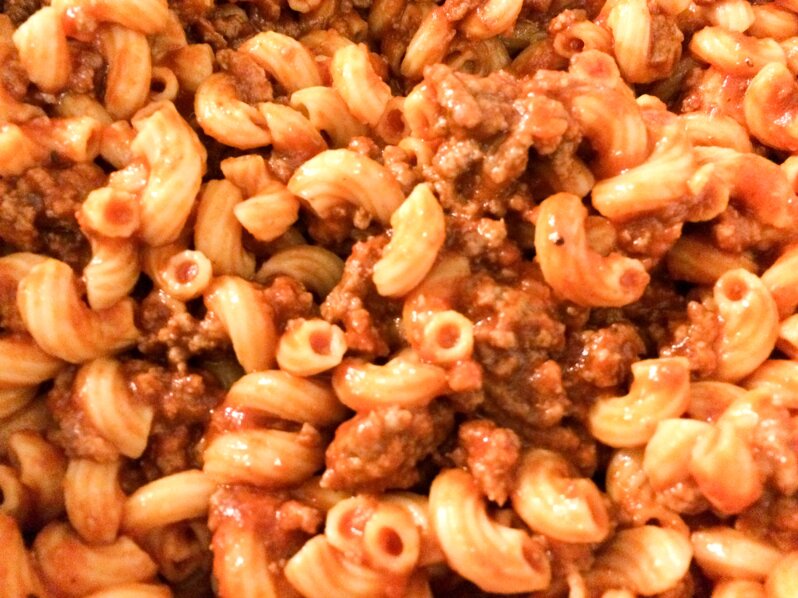
Photo credit: https://depositphotos.com/home.html
Soupy Macaroni
This example of goulash was one I grew up with. Most likely it originates from one of my mom’s Campbell’s Soup cookbooks. Although my version does not use soup, hers used tomato soup. I remember eating this in the 1970s.
Recipe attributed to Gena Philibert-Ortega.
Makes 6 servings.
Ingredients
- 1 package, large elbow macaroni
- 1-2 tablespoons olive oil
- 1 small yellow onion, diced
- 1 green bell pepper, diced
- 1 pound ground beef
- 1 24-ounce jar of spaghetti sauce (use your favorite red sauce)
- Salt
- Pepper
- Grated Parmesan cheese (optional)
Directions
Boil water to cook elbow macaroni. While the water is boiling, pre-heat a large, deep pan. Pour olive oil in pan. Sauté onions and green peppers until the onions are clear. Add ground beef and brown. Use a paper towel or some other method to remove excess oil in pan. To the pan, add cooked macaroni and stir. (You may not need to use all of the cooked macaroni.) Add jar of spaghetti sauce to pan, stir. Add salt and pepper to taste (can be omitted). Serve in bowls with grated parmesan cheese on top.
What’s Your Family’s Favorite Recipe?
Re-read your written recipe several times as you write and edit it to make sure you remember everything someone has to know to follow it. Consider sharing it with someone to see if they understand how to cook that recipe. They may ask questions that you haven’t considered.
What’s your family’s favorite recipe? What can you pass on to them to keep that family food tradition alive? Share your recipe in the comments below.
Create a free account at GenealogyBank for 7 days to start your journey and discover the stories your ancestors left behind.
Note on the header image: National Cookbook Month. Credit: https://depositphotos.com/home.html
_____________
(1) Jacob, Dianne. Will Write for Food: Pursue Your Passion and Bring Home the Dough Writing Recipes, Cookbooks, Blogs, and More. Fourth edition. Hachette Books, 2021, pp. 205-240.
(2) I used her book’s 4th edition for this article, but any edition of her book can be helpful in learning to write recipes.
