
 November 7, 2025
Introduction: In this article, Melissa Davenport Berry gives the 14th part in her series on Mayflower descendants that focuses on Katie Crocker and her family line, featuring the Makepeace family and their cranberry farm. Melissa is a genealogist who has a website, americana-archives.com, and a Facebook group, New England Family Genealogy and History.
Today I resume my series on “Mayflower Descendants: Who’s Who,” featuring more kin in the Katie Crocker tree. This article is my “Cranberry Season” special.
My subjects for this story include Pilgrim scions Abel Dennison Makepeace (1832-1916), the “Cranberry King,” and his wife Josephine Chipman (Crocker) Makepeace (1837-1926). This couple fittingly serves up a perfect dish of history for the season.
Abel was a pioneer among cranberry growers in initiating the development of large-scale corporate bogs, which yielded substantial profits for both his family and their shareholders. From this sprang Ocean Spray Cranberries, Inc.
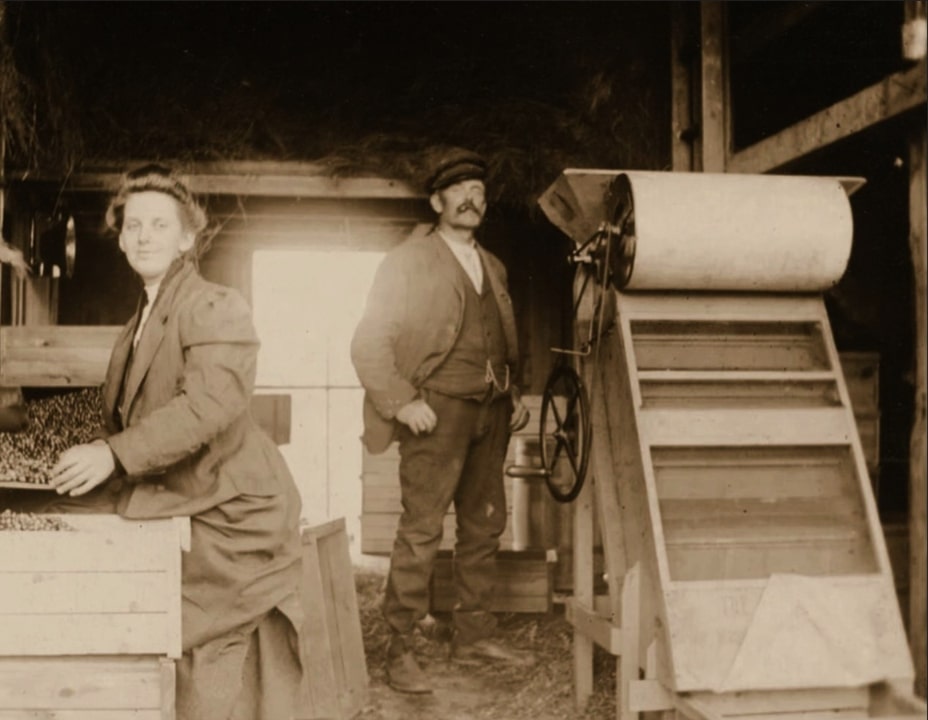
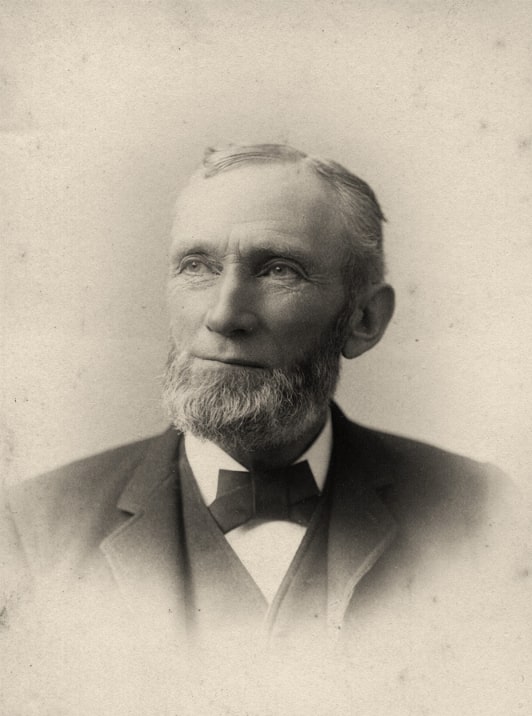
Abel Dennison Makepeace, born to Alvin and Drusilla (Swift) Makepeace, descends from Mayflower passengers John Alden and Priscilla Mullins.
Additionally, Abel claims descent from noted Quakers Nathaniel Wing and Silas Swift, and Captain Edward Bangs – who immigrated on 31 July 1623 to Plymouth Colony, sailing on the Anne.
Abel on 2 January 1856 married Josephine Chipman Crocker, born to John Chipman and Mary Augusta (Alexander) Crocker, and direct descendant of Mayflower passengers John Howland and Elizabeth Tilley. Read more Mayflower and Crocker family connections with the links at the end of this article.
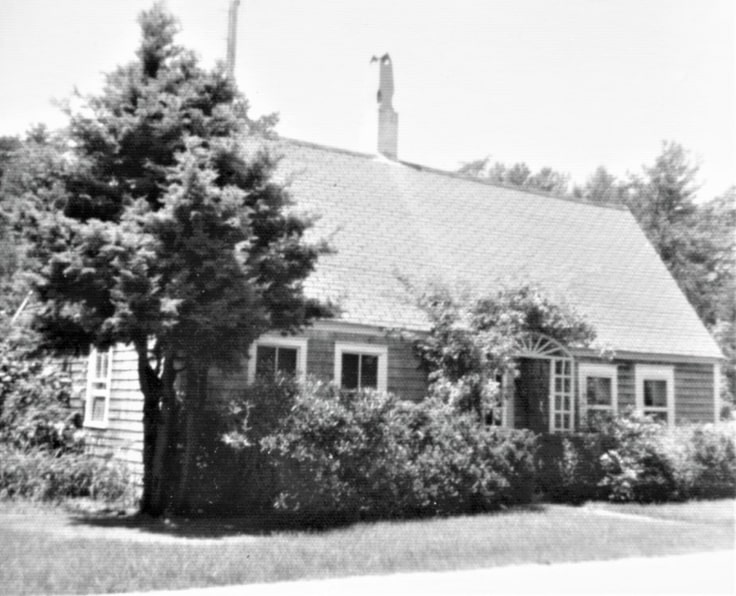
Abel and Josephine had a home in Barnstable, Massachusetts, built by builder Stephen Crocker Hamblin and later occupied by Katie Crocker’s great-great grandfather Zenas Crocker.
Someone out in Ohio published this little write up on Abel shortly after he passed in the Plain Dealer newspaper. This person was obviously inspired by Abel and his success.
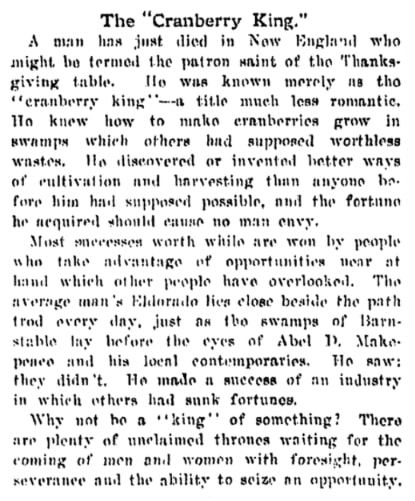
This article reports:
The “Cranberry King.”
A man has just died in New England who might be termed the patron saint of the Thanksgiving table. He was known merely as the “cranberry king” – a title much less romantic. He knew how to make cranberries grow in swamps which others had supposed worthless wastes. He discovered or invented better ways of cultivation and harvesting than anyone before him had supposed possible, and the fortune he acquired should cause no man envy.
Most successes worth while are won by people who take advantage of opportunities near at hand which other people have overlooked. The average man’s Eldorado lies close beside the path trod every day, just as the swamps of Barnstable lay before the eyes of Abel D. Makepeace and his local contemporaries. He saw; they didn’t. He made a success of an industry in which others had sunk fortunes.
Why not be a “king” of something? There are plenty of unclaimed thrones waiting for the coming of men and women with foresight, perseverance, and the ability to seize an opportunity.
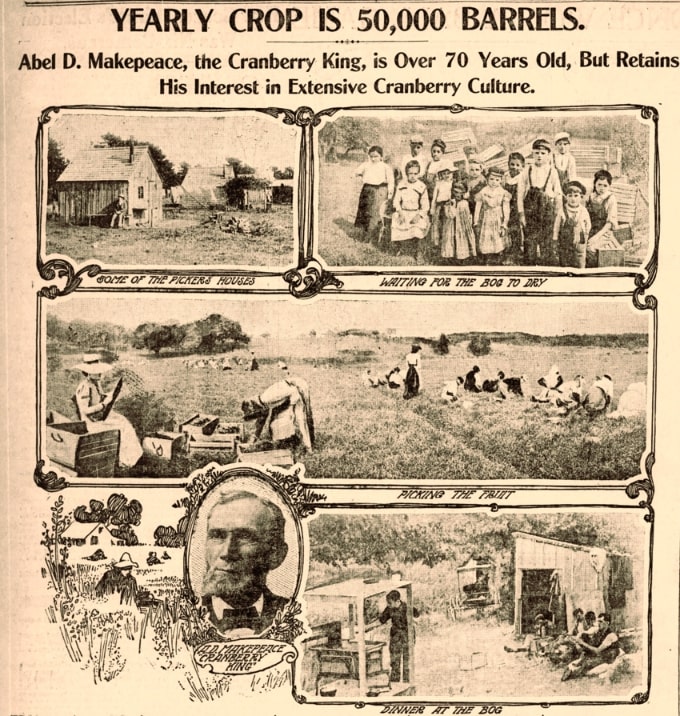
Here is a 1903 newspaper clip from Katie Crocker’s collection about Abel Makepeace’s cranberry operation.
Abel started as a harness maker in the village of Hyannis, Massachusetts, and never stopped dreaming.
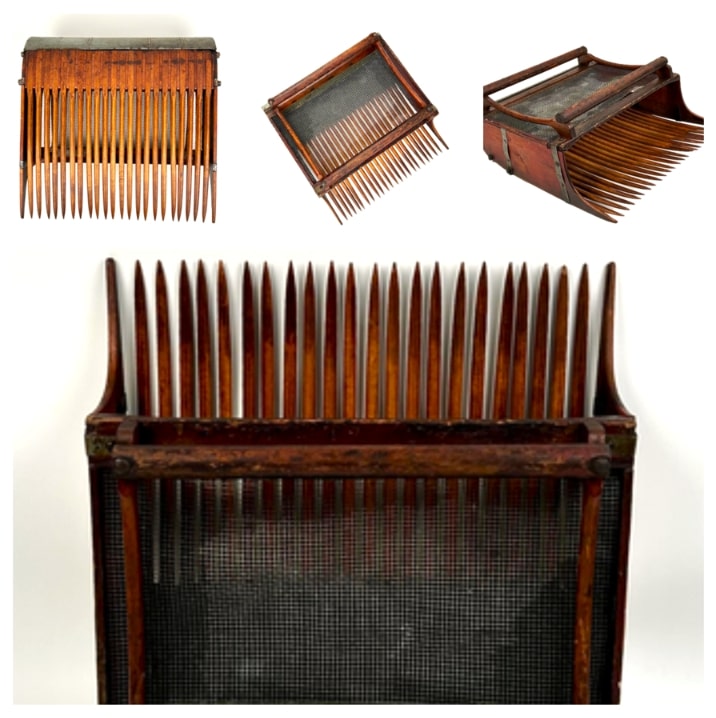
After a short time in the cranberry biz, he invented several designs of scoops and some machines used for harvesting. Below are different views of one of Abel’s cranberry scoops.
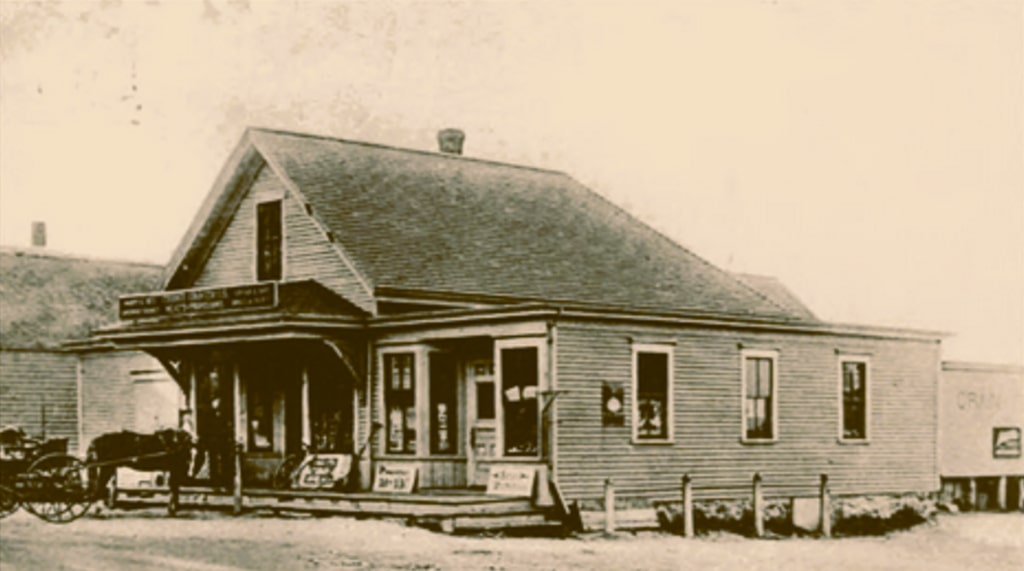
Abel also operated a brickyard at West Barnstable, Massachusetts, and ran several different stores in Cape Cod. He was the ideal of true Yankee ingenuity.
The Gilmore family of Craver, Massachusetts, direct descendants of Abel and Josephine, remain in the cranberry business and noted their connection in a 2016 Boston Herald article.
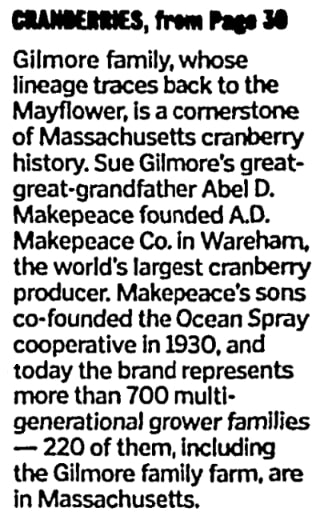
This article reports:
The Gilmore family, whose lineage traces back to the Mayflower, is a cornerstone of Massachusetts’ cranberry history. Sue Gilmore’s great-great grandfather Abel D. Makepeace founded A. D. Makepeace Co. in Wareham, the world’s largest cranberry producer. Makepeace’s sons [John Crocker Makepeace and William Fearing Makepeace] co-founded the Ocean Spray cooperative in 1930, and today the brand represents more than 700 multi-generational grower families – 220 of them, including the Gilmore family farm, are in Massachusetts.
Another Crocker alliance was made through Abel and Josephine’s son William Fearing Makepeace (1861-1946) when he married Abbie Louise Crocker, born to Josiah and Pamelia Allen (Howland) Crocker. The couple left descendants.
Explore your family history by creating your free account at GenealogyBank for 7 days, because every life deserves to be remembered, recorded, and rediscovered.
Note on the header image: “Mayflower in Plymouth Harbor,” by William Halsall, 1882. Credit: Wikimedia Commons.
Related Articles:
- Mayflower Descendants: Who’s Who, Part 35 (part 1)
- Mayflower Descendants: Who’s Who, Part 35 (part 2)
- Mayflower Descendants: Who’s Who, Part 35 (part 3)
- Mayflower Descendants: Who’s Who, Part 35 (part 4)
- Mayflower Descendants: Who’s Who, Part 35 (part 5)
- Mayflower Descendants: Who’s Who, Part 35 (part 6)
- Mayflower Descendants: Who’s Who, Part 35 (part 7)
- Mayflower Descendants: Who’s Who, Part 35 (part 8)
- Mayflower Descendants: Who’s Who, Part 35 (part 9)
- Mayflower Descendants: Who’s Who, Part 35 (part 10)
- Mayflower Descendants: Who’s Who, Part 35 (part 11)
- Mayflower Descendants: Who’s Who, Part 35 (part 12)
- Mayflower Descendants: Who’s Who, Part 35 (part 13)
