
 October 7, 2026
Introduction: With October comes Halloween, and thoughts of witches and ghosts. In this article, Melissa Davenport Berry describes one of the earliest convictions for witchcraft in the New World: Goody Cole. Melissa is a genealogist who has a website, americana-archives.com, and a Facebook group, New England Family Genealogy and History.
In 1938 the end of a most haunting subject made headlines across the country.
A woman who had been accused of witchcraft in Hampton, New Hampshire, in the mid to late 1600s – years before the infamous Salem witch trials – was cleared in time for the town’s 1938 tercentenary celebration by the Goody Cole Society, named in her honor.
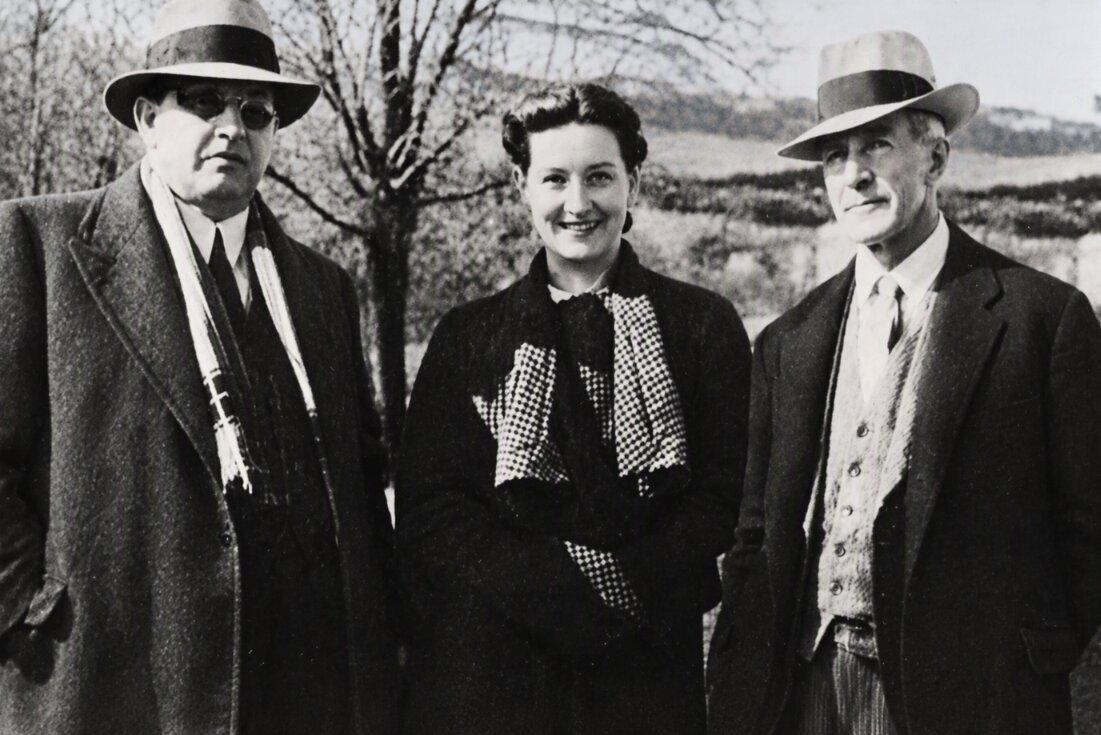
Here is a photo of the founding members of the Goody Cole Society who helped in clearing her name. Left to right: James Tucker, Phyllis Tucker, William D. Cram, 1938.
Although some reports are factual, many accounts of this story often take considerable liberties. Nevertheless, Goody Cole remains a legend who will not be forgotten.
I came across an article published in the Los Angeles Examiner with the catchy headline:
Poor Old ‘Goody’ Cole Cleansed of Witchcraft After 300 Years. Convicted of ‘Familyarryty with the Devill’ in 1656 and Later Buried with a Stake Through Her Heart and a Horseshoe on Its End, She Is Now Officially Declared Guiltless and Restored to the Voters’ Rolls by the Town of Hampton, New Hampshire.
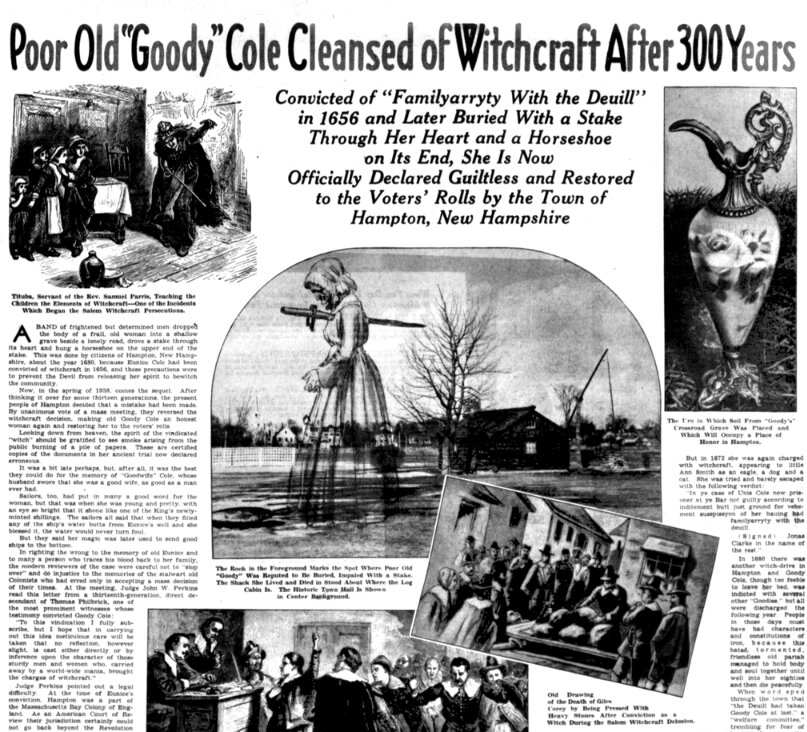
This article reports:
A band of frightened but determined men dropped the body of a frail, old woman into a shallow grave beside a lonely road, drove a stake through its heart and hung a horseshoe on the upper end of the stake. This was done by citizens of Hampton, New Hampshire, about the year 1680, because Eunice Cole had been convicted of witchcraft in 1656, and these precautions were to prevent the Devil from releasing her spirit to bewitch the community.
Now, in the spring of 1938, comes the sequel. After thinking it over for some thirteen generations, the present people of Hampton decided that a mistake had been made. By unanimous vote of a mass meeting, they reversed the witchcraft decision, making old Goody Cole an honest woman again and restoring her to the voters’ rolls.
Looking down from heaven, the spirit of the vindicated “witch” should be gratified to see smoke arising from the public burning of a pile of papers. These are certified copies of the documents in her ancient trial now declared erroneous.
It was a bit late perhaps, but, after all, it was the best they could do for the memory of “Goodwife” Cole, whose husband swore that she was a good wife, as good as a man ever had.
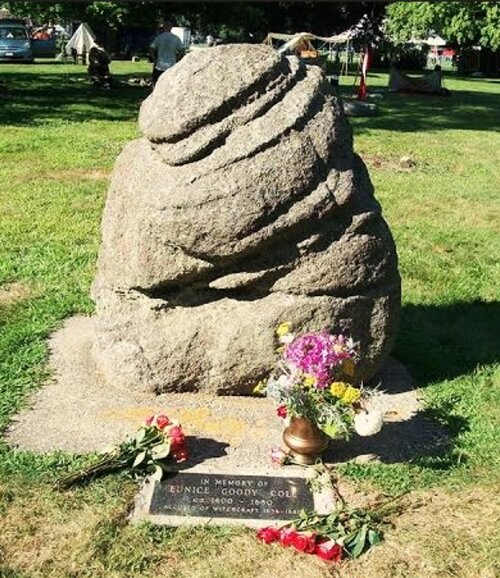
Sailors, too, had put in many a good word for the woman, but that was when she was young and pretty, with an eye so bright that it shone like one of the King’s newly minted shillings. The sailors all said that when they filled any of the ship’s water butts from Eunice’s well and she blessed it, the water would never turn foul.
But they said her magic was later used to send good ships to the bottom.
Here is an image from William D. Cram’s article, “Society Formed at Hampton Beach, N. H., to Apprehend Those Falsely Accusing Eunice (Goody) Cole of Being [a] Witch.”
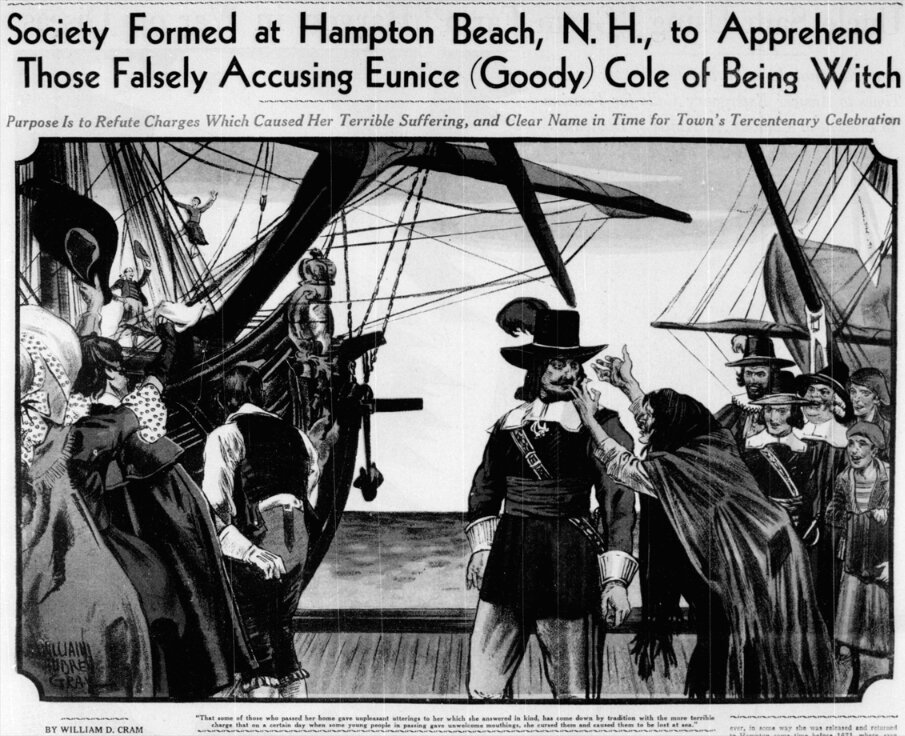
This photo caption reads:
That some of those who passed her home gave unpleasant utterings to her which she answered in kind, has come down by tradition with the more terrible charge that on a certain day when some young people in passing gave unwelcome mouthings, she cursed them and caused them to be lost at sea.
The Los Angeles Examiner article goes on to report:
In righting the wrong to the memory of old Eunice and to many a person who traces his blood back to her family, the modern reviewers of the case were careful not to “slop over” and do injustice to the memories of the stalwart old Colonists who had erred only in accepting a mass decision of their times. At the meeting, Judge John W. Perkins read this letter from a thirteenth-generation, direct descendant of Thomas Philbrick, one of the most prominent witnesses whose testimony convicted Goody Cole:
“To this vindication I fully subscribe, but I hope that in carrying out this idea meticulous care will be taken that no reflection, however slight, is cast either directly or by inference upon the character of those sturdy men and women who, carried away by a world-wide mania, brought the charges of witchcraft.”
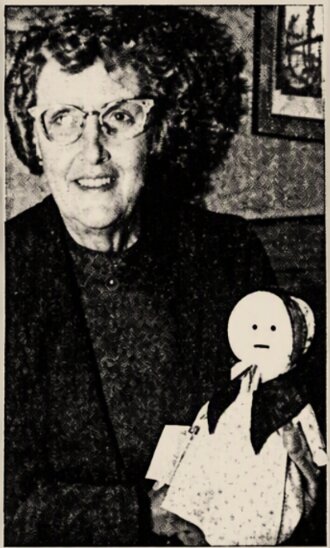
This photo caption reads:
Giving Goody Cole the love she went without for so long, Ruth Pratt of Hampton fashions beautiful handmade dolls modeled after her own kind image of the so-called witch of Hampton.
The Los Angeles Examiner article further reports:
Judge Perkins pointed out a legal difficulty. At the time of Eunice’s conviction, Hampton was a part of the Massachusetts Bay Colony of England. As an American Court of Review, their jurisdiction certainly could not go back beyond the Revolution, and he doubted if they could do much more than to restore her good name.
In this photo we see (left to right): Commissioner Frederick R. Batchelder; Judge John W. Perkins; and John W. R. Brooks, moderator of the town meeting which reinstated Goody Cole to citizenship.
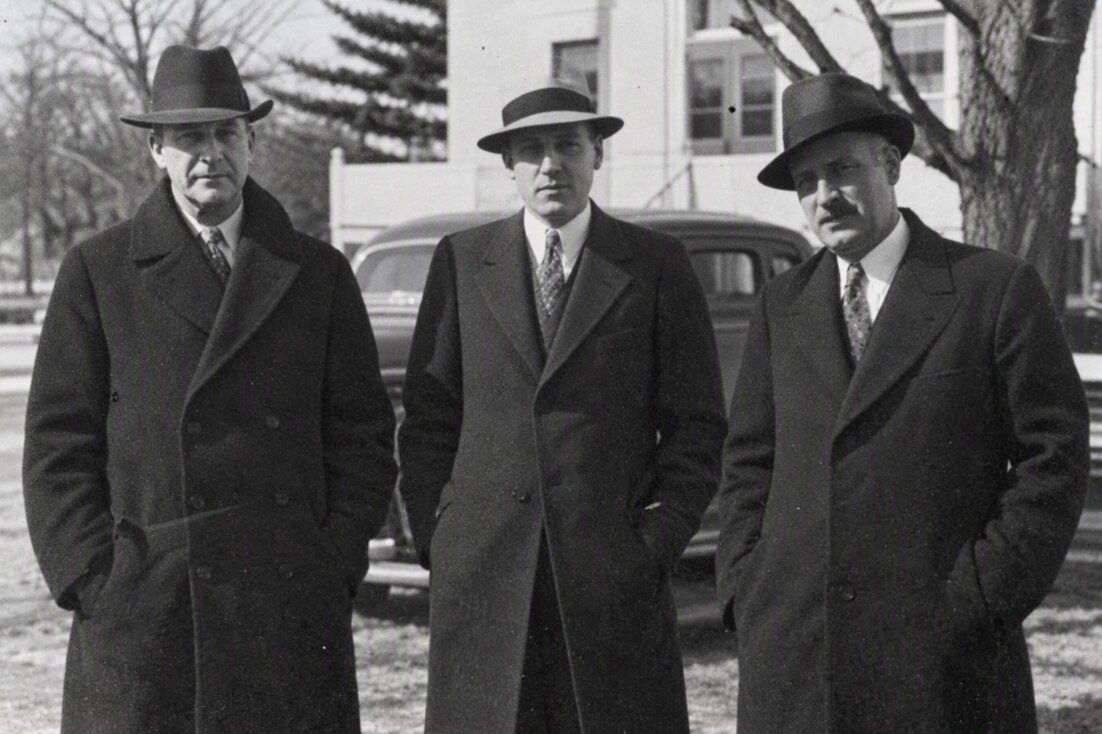
The Los Angeles Examiner article:
It should be remembered that in 1656 the colonies were hardly more than a ribbon of coast, rather sparsely inhabited by transplanted Europeans, with a howling wilderness behind them.
At that time, every ship from England brought news of an epidemic of witchcraft. Hopkins, the famous “witch smeller” was rounding up witches everywhere, getting confessions (by torture) on which many were hanged. There was no more reason for the Colonists to ridicule this epidemic in the mother country than a visitation of the black plague.
The first symptom of the infection in the Colonies seems to have been the behavior of children in church. Considering that small boys and girls were forced to sit in uncomfortable pews through a three-hour morning service, their actions were not so strange.
To be continued…
Note: some of the graphics in this article have been AI enhanced.
Explore your family history by creating your free account at GenealogyBank for 7 days, because every life deserves to be remembered, recorded, and rediscovered.
Note on the header image: photos of the 1938 celebration of the vindication of Goody Cole in Hampton, New Hampshire. Credit: Lane Memorial Library.
Sources:
Lane Memorial Library–Goody Cole References including “The Mark of Goody Cole” published by Cheryl Lassiter in 2014.
