
 October 5, 2026
October is Family History Month. Each year it seems like the perfect time to work on family history, so I start thinking of what I can work on or achieve with my family history in 30 days. Unfortunately, too often I let the month fly by. This year, I’ve come up with a weekly plan for my first four generations (direct line ancestors starting with me, parents, grandparents, and great-grandparents, so 23 people total) that doesn’t feel overwhelming.
Follow along and join me each week as I explain the process I am using and my progress. Whether you choose to work on four generations or six, this is an opportunity to get your family history in order and feel like you’ve achieved something for October.
Here is my 4 x 4 Plan (4 generations in 4 weeks) with themes.
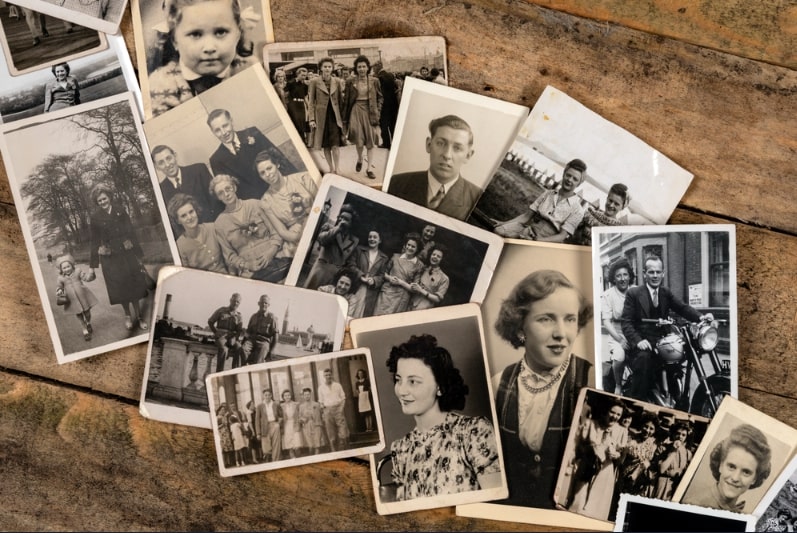
Photo credit: https://depositphotos.com/home.html
Week 1: Conduct a 4-Generation Audit
Even those of us who have been researching for a long time have some mistakes and omissions in our family tree, including factual errors, missing documents, and records that need to be acquired. Not wanting to bite off more than I can chew, I’m going to look at my four generations and make sure that I have all the documents and relevant facts that I should on my family tree.
For this week, I want to concentrate on basic records such as the U.S. Census, vital records, and newspapers. As I look at my family tree I’ll be asking:
- Have I found, documented, analyzed and attached my 4 generations in the U.S. Census? For my family, that would be the 1900-1950 U.S. censuses.
- Do I have everyone’s birth certificates or delayed birth certificates?
- Do I have everyone’s marriage certificates (if applicable)?
- Do I have death certificates for those who are deceased?
- Do I have everyone’s newspaper obituaries?
- Have I searched GenealogyBank for newspaper articles for my 4 generations?
Week 2: Create a Timeline
A timeline is an important genealogy tool that too few of us use. A timeline can help you keep track of what you know about an ancestor, what you are missing, and historical events they lived through. Later, a timeline can be used to help you write a story or track what is missing, and figure out what research you still need to do.
I recognize that creating or adding timelines for 23 people might be too much for me this week. So, I’m going to concentrate on one ancestor and add another should I have time.
Week 3: What Am I Missing?
For this week I will look at my ancestor I created a timeline for and analyze it for what records or history is missing. I’ll do some of this in the first week but for this third week I want to go more in-depth into my ancestor’s life. For example, a great-grandfather served in the military – do I have all the records I should have to document this? I’ll go through each generation and note anything I am missing that I need to look for.
Week 4: Write a Short Narrative About One Ancestor
Genealogy can be overwhelming and there’s no doubt that research is more fun than writing it all down to share. Instead of thinking about writing a book or an ancestor’s story, I’m going to choose one event and write up something that I can then add images to and share with my family. Having done my audit, created a timeline, and identified what is missing, this step should be easier than starting from scratch.
Happy Family History Month!
It’s Family History Month. Don’t let this opportunity pass you by. Join me as we make sure we have everything we need for at least our first four generations in our family tree. Join me each week and share your experiences in the comments below.
Create a free account at GenealogyBank for 7 days to start your journey and discover the stories your ancestors left behind.
Note on the header image: Family History Month graphic. Credit: https://depositphotos.com/home.html
