
 October 28, 2026
Introduction: In this article, with Halloween approaching, Melissa Davenport Berry writes more about ghost hunter John Parker, focusing on the eerie ghost haunting Manor House on Shelter Island. Melissa is a genealogist who has a website, americana-archives.com, and a Facebook group, New England Family Genealogy and History.
Today I continue my series on John Cuthbert Parker (1904-1997), architect, artist, and famous paranormal investigator, who bewitched a whole generation with his tales of ghost hunting on some of the most infamous haunted historical properties.
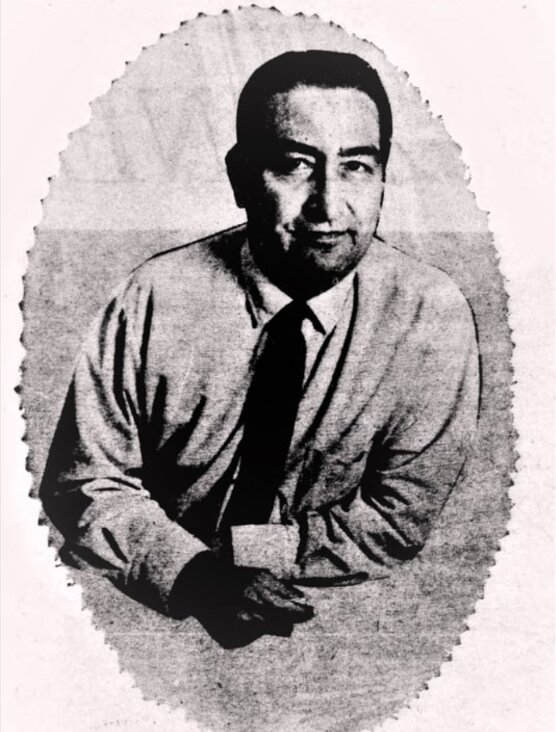
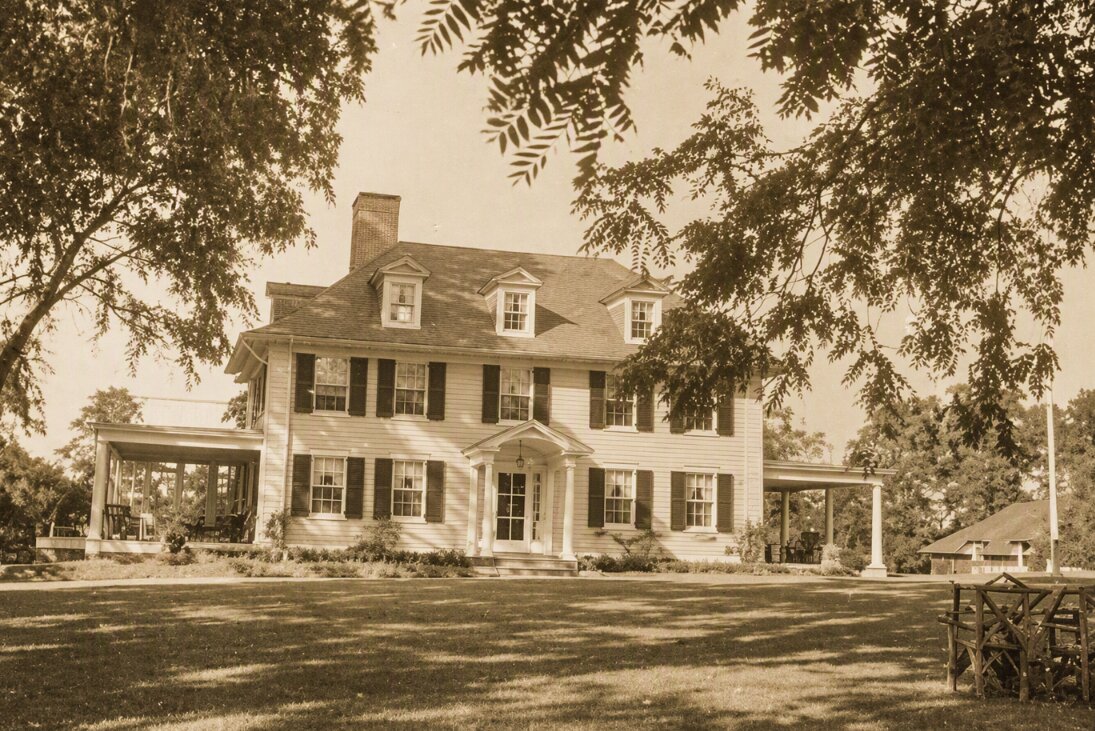
One haunting locale Parker visited during his days of dabbling in the paranormal was the Manor House located on Shelter Island, New York.
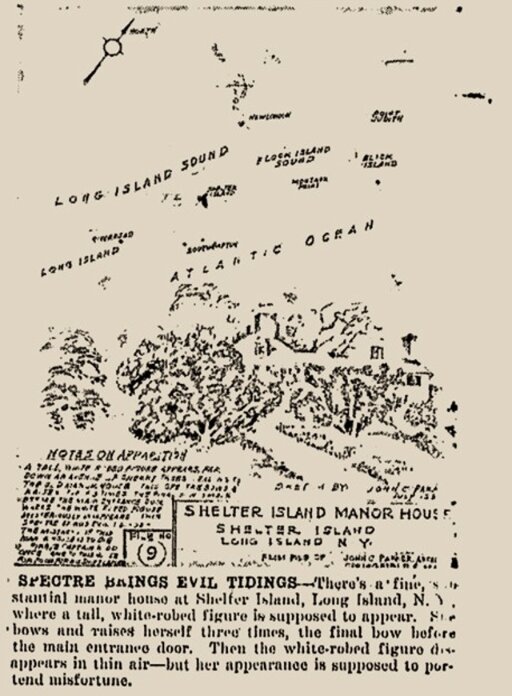
A magazine published this illustration about Parker’s visit to investigate the Manor House ghost:
“…where a tall, white-robed figure is supposed to appear… her appearance is supposed to portend misfortune.”
Below is a watercolor of the Manor House painted by John Parker.
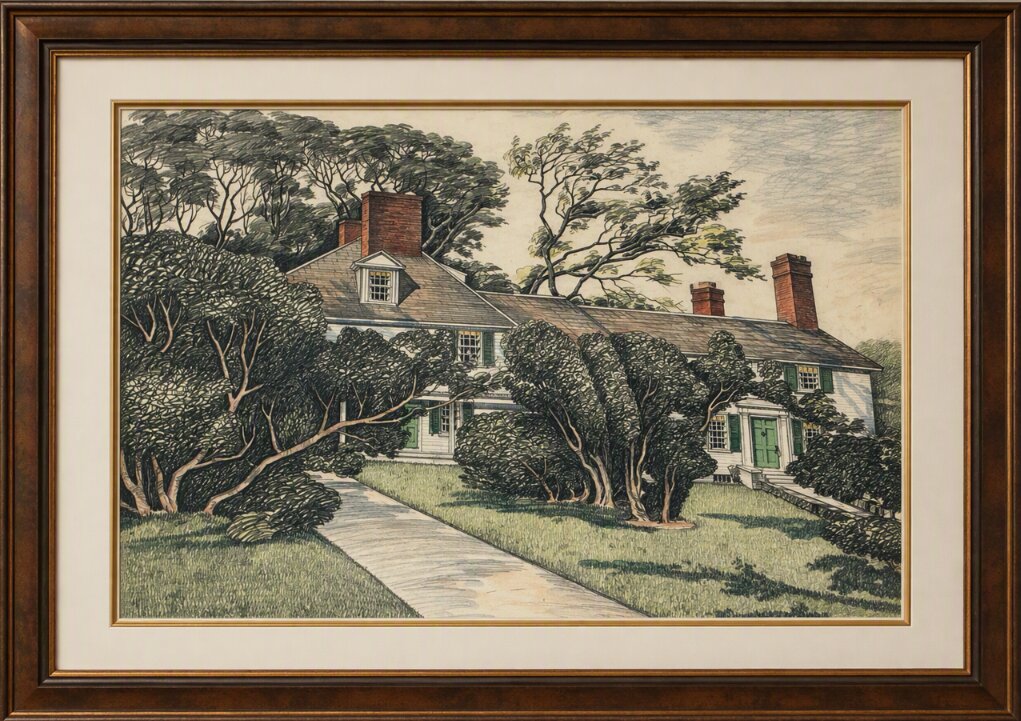
Parker furnished a narrative for his audience which is featured below. I will include some background history, along with genealogy ties showing two prominent families who first settled on the shores of Long Island: the Sylvester and Gardiner lines.
Shelter Island is a name derived from the Manhasset Indians, who called it “Manhansack-aha-quash-awamock,” meaning “island sheltered by islands.”
The island was also a safe harbor for 17th century Quakers (Society of Friends) who were persecuted by the Puritan authorities.
The owner of the island, Nathaniel Sylvester (1610-1680), became known as the “Lord of Shelter.”
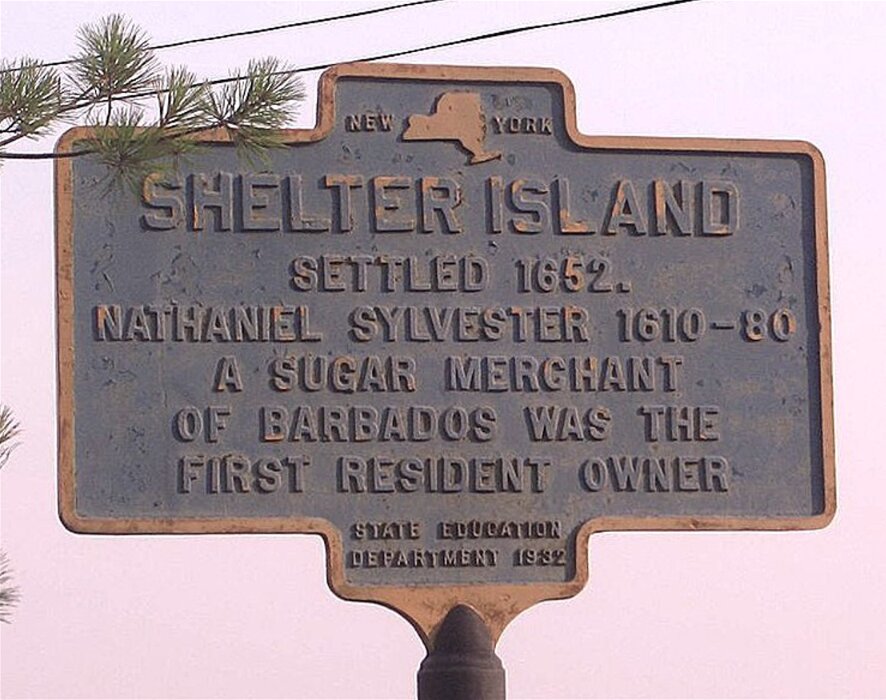
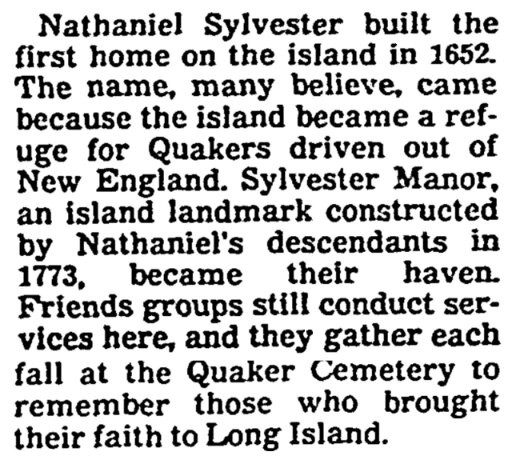
Below is a news clip from the New York Post that briefly describes Sylvester’s role in sheltering the Quakers.
The Quaker Cemetery, commemorated in 1884 by Cornelia Conway Felton Horsford (a lineal descendant of Nathaniel Sylvester) to all residents of the property over the centuries, including several persecuted Quakers who found refuge with the Sylvesters in the 17th century.
Read “Nathaniel Sylvester, ‘Lord of Shelter’ for 17th Century Quakers.”
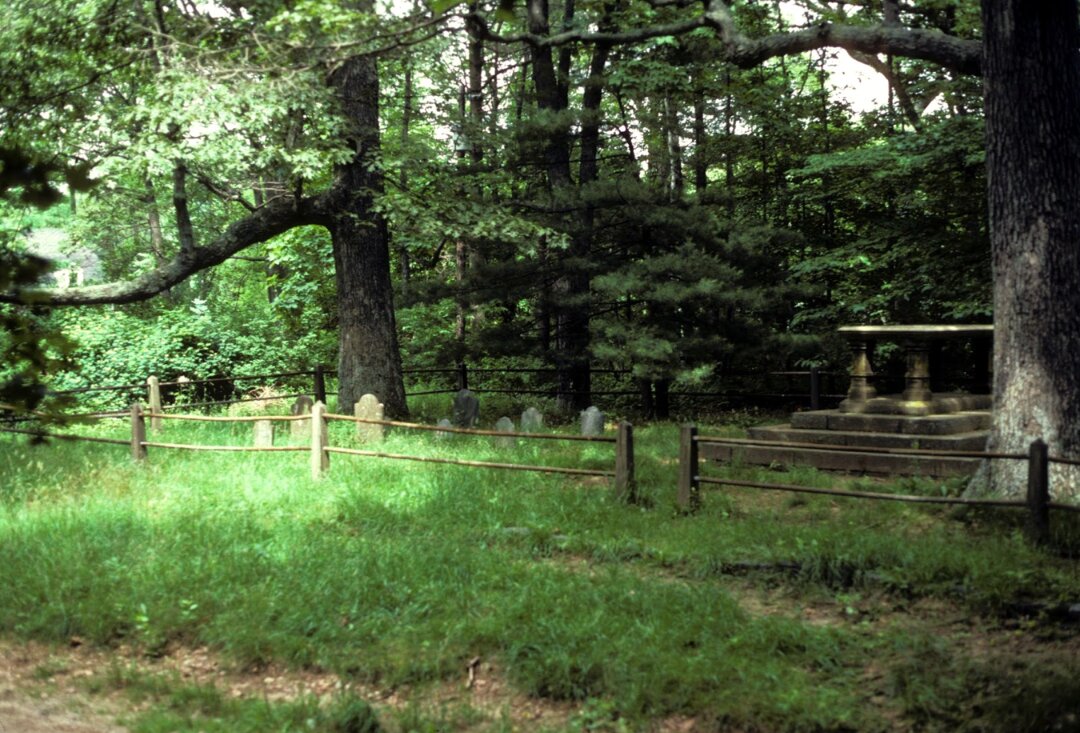
Today, the site (specifically, the Quaker monument on the Sylvester Manor grounds) is the Shelter Island chapter of The Society of Friends.
Note on the incorrect date in the above New York Post article: Brinley Sylvester, grandson of Nathaniel, built the present Manor House in 1737, not 1773, and incorporated some of the material that could be taken from the old house before its demolition.
A stone marks the spot today where Nathaniel Sylvester’s original 1652 house stood, and the lines of its foundations can still be traced in the turf.
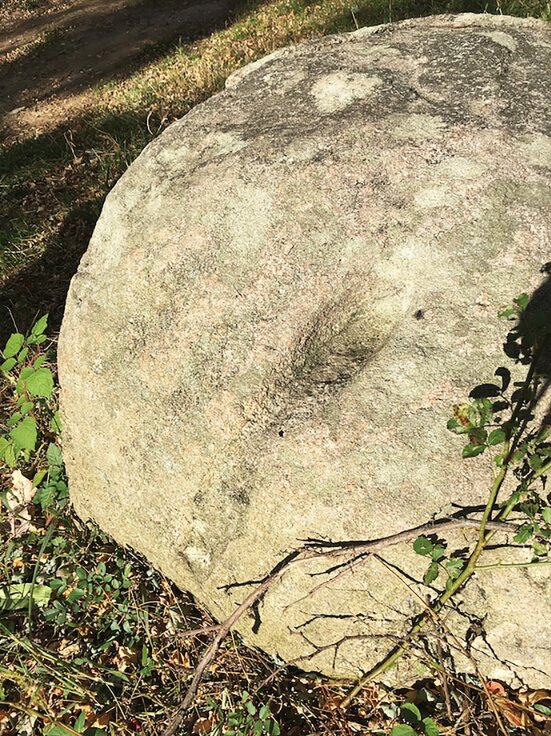
A rock on the Sylvester Manor property has an indentation known as the “Devil’s Footprint.”
John Taylor, a Quaker from Barbados, wrote in his journal about Shelter Island:
“And then when I was Clear of those Parts, I returned to Shelter-Island to the Friends there, who received me Joyfully. So, I stayed there awhile, until our Ship that I went in was loaded and ready to go to Sea again, for the Island of Barbados: And there came several Friends from other Parts in New England, to see us: One was Mary Dyer, who afterwards was put to Death by the Cruel Persecutors and Processors of New-England…”
Salem Quakers Lawrence and Cassander Southwick retreated to Shelter Island.
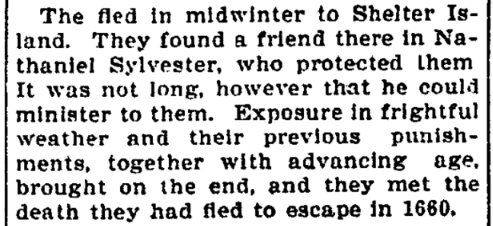
Read: “Quaker Letter from 1660 Reveals Troubled Time.”

Here is an image of Parker’s notes about the haunted Manor House.
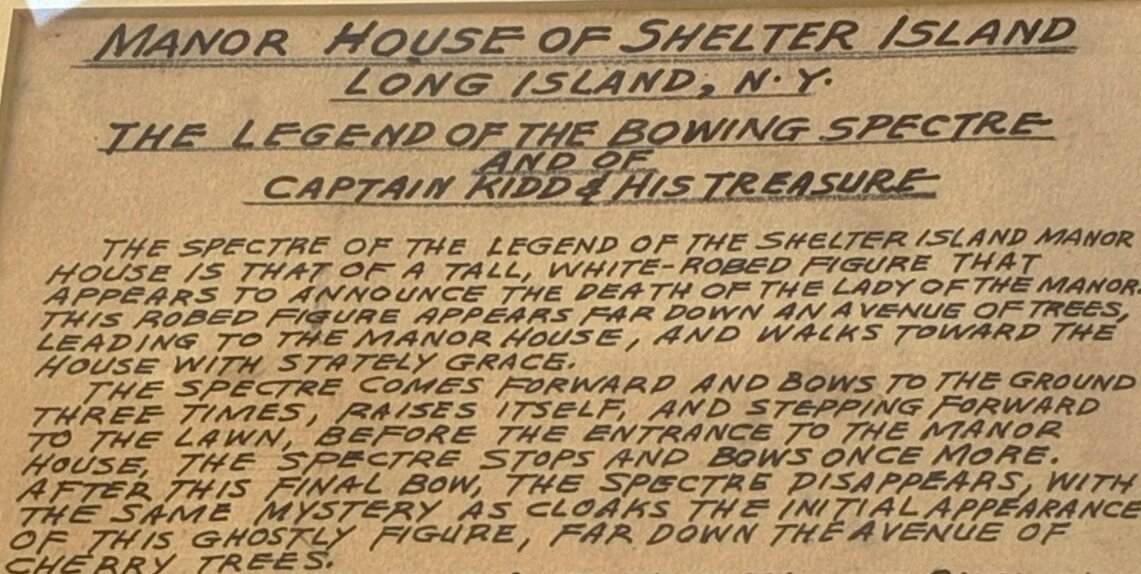
These notes read:
Manor House of Shelter Island, Long Island, N.Y.
The Legend of the Bowing Spectre and of Captain Kidd & His Treasure
The spectre of the legend of the Shelter Island Manor House is that of a tall, white-robed figure that appears to announce the death of the Lady of the Manor. This robed figure appears far down an avenue of trees, leading to the Manor House, and walks toward the house with stately grace.
The spectre comes forward and bows to the ground three times, raises itself, and stepping forward to the lawn before the entrance to the manor house, the spectre stops and bows once more. After this final bow, the spectre disappears, with the same mystery as cloaks the initial appearance of this ghostly figure, far down the avenue of cherry trees.
Who is this mysterious female spirit? Was it a Quakeress who stayed on the island? Perhaps…no one really knows.
There is also a story of the famous Captain Kidd who made an unexpected visit to this Manor House. That will be covered in my next article this Friday.
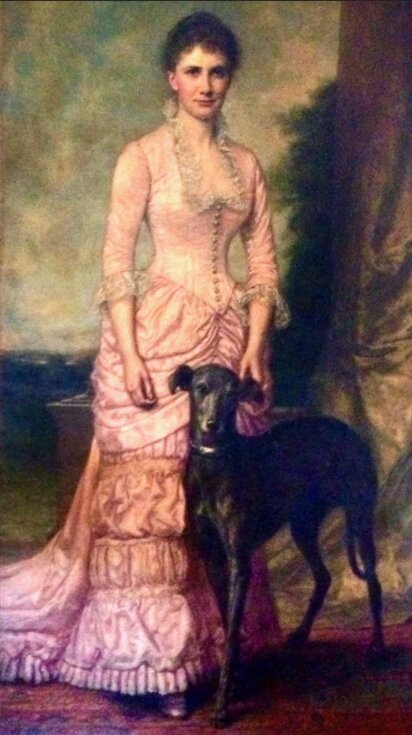
Below is genealogy of descendants who resided on Shelter Island.
- Nathaniel Sylvester married Grissell Brinley.
- Benjamin L’Hommedieu married Patience Sylvester and 2nd, Martha Bourne.
- Ezra L’Hommedieu married Mary Catherine Havens.
- Judge Samuel Smith Gardiner married Mary Catherine L’Hommedieu.
- Phoebe Dayton Gardiner married Eben Norton Horsford.
- Their daughter Cornelia Conway Felton Horsford was among the descendants who helped erect the Quaker Monument at Shelter Island.
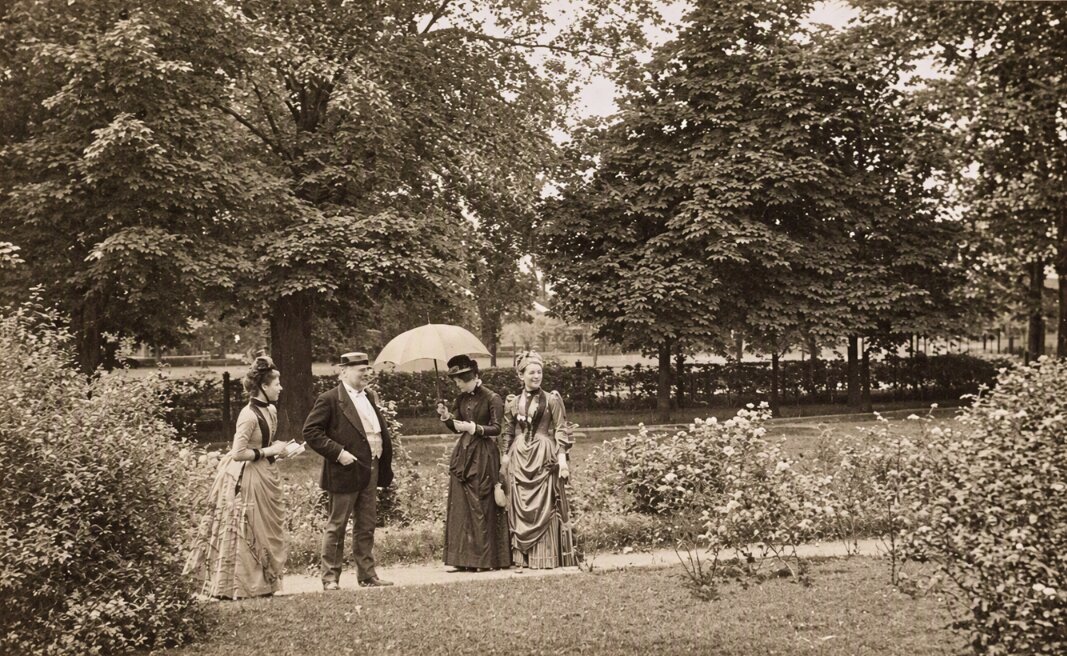
Here is a photo of the Horsford family in the Sylvester Manor garden (from left to right): Mary Gardiner Horsford Curtis, Eben Norton Horsford, Mary L’Hommedieu Horsford, and Gertrude Hubbard Horsford Fiske.
Stay tuned for more…
Note: some of the graphics in this article have been AI enhanced.
Create a free account at GenealogyBank for 7 days to start your journey and discover the stories your ancestors left behind.
Note on the header image: the ghost of Manor House. Credit: AI-generated art by Melissa Davenport Berry.
Related Articles:
- It’s Haunted! The Ghosts at the Porter-Phelps-Huntington Mansion?
- Spooky Tales: The Ayers-Allen Haunted Tavern
- New England Ghost Hunter and His Haunted Houses (part 1)
- New England Ghost Hunter and His Haunted Houses (part 2)
- New England Ghost Hunter and His Haunted Houses (part 3)
- New England Ghost Hunter and His Haunted Houses (part 4)
- The Ghosts of Dent’s Palace in Maryland
- Writer Nathaniel Hawthorne’s Real-Life ‘Ghost Story’
- Ohio Specter Haunts Newlywed Cottage
- The Great Nantucket Bank Robbery & the Haunting of William Coffin
