
 February 20, 2026
Introduction: In this article, Melissa Davenport Berry continues her series on Mayflower descendants, focusing again on Jennifer (Koehler) Mackall and the Wixon family line. Melissa is a genealogist who has a website, americana-archives.com, and a Facebook group, New England Family Genealogy and History.
Today I continue my series on “Mayflower Descendants: Who’s Who,” featuring the family lines of Jennifer (Koehler) Mackall, born in 1963 to Christopher Howland Koehler and Eleanor Marion (West) Koehler.
Jennifer is a direct descendant of Mayflower passengers Stephen Hopkins and his children Constance and Giles, William Bradford, George Soule, Thomas Rogers, Joseph Rogers, William Brewster and his wife Mary, Richard Warren, John Tilley, Elizabeth Tilley, and John Howland.
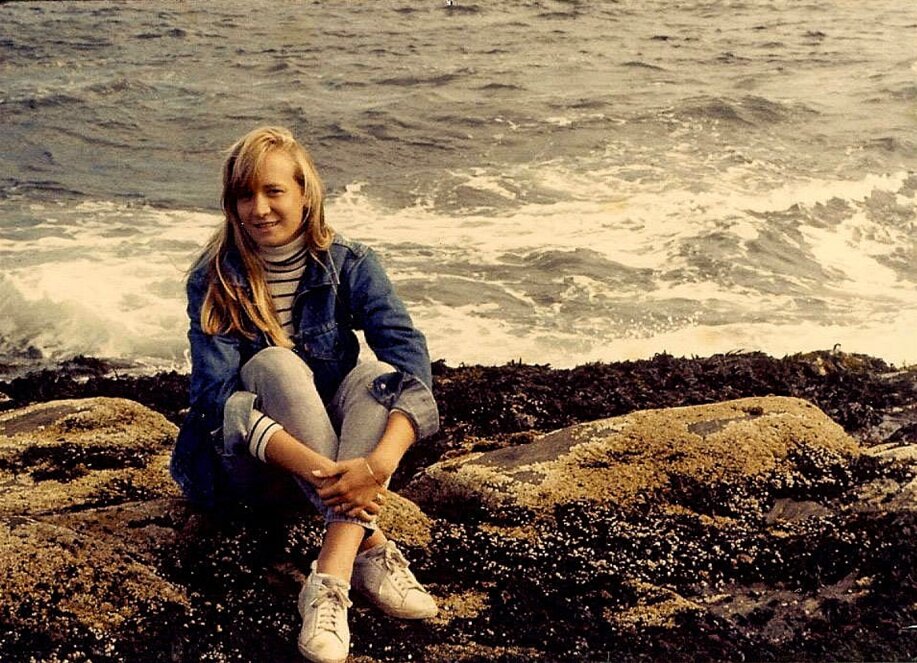
Here is a genealogy chart of Jennifer’s lineage listing all her Mayflower lines. A red arrow points to her. (At the end of this article see the Wixon genealogy chart with Mayflower lines.)

To recap: My last article, Part 2, covered Jennifer’s great-grandparents Capt. Nathaniel Hawes Wixon (1896-1970), known as “Than,” son of Edgar Francis Wixon and Adelia M. (Hawes) Wixon, and his wife Marion Barstow (Baker) Wixon, one of the eight children born to Robert Clinton Baker and Hattie Hamblin (Barstow) Baker.
Here is a photo of Jennifer’s great-great-grandparents Edgar Francis Wixon and Adelia M. (Hawes) Wixon.
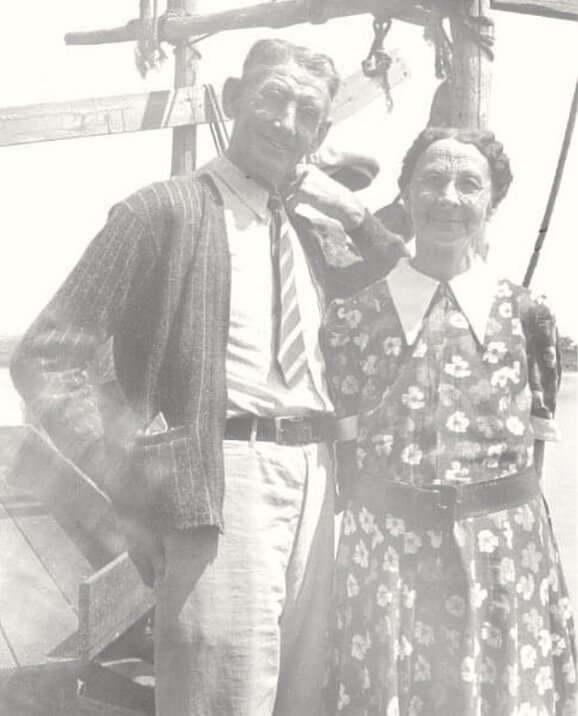
Here is a photo of Jennifer’s great-grandparents Than Hawes Wixon and Marion Barstow (Baker) Wixon.

Than was a pillar of the community. A successful master mariner and fisherman, he served on the regional school committee and as a selectman, and had a school named after him. He was the go-to guy for all matters and known to be a real family man.
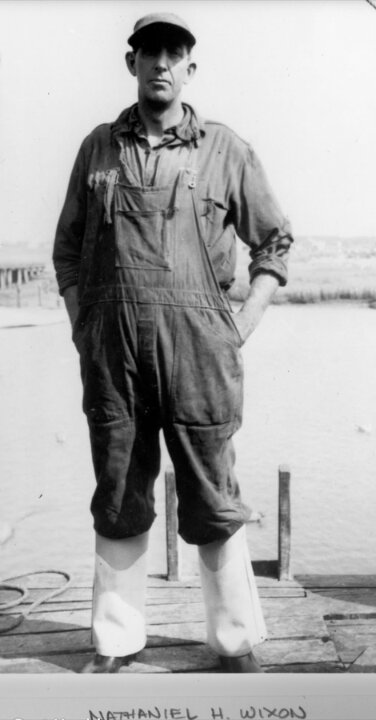
And when times were rough and Prohibition was in place, Than found a way to keep coin in his pocket as well as his crew’s.
As the saying goes, “necessity is the mother of invention,” and Capt. Nathaniel “Than” Wixon added rum running to his list of services.
One of his daughters, Pauline Frances (Wixon) Derick (1917-1997), was the family historian and shared the skinny on her father’s moonlighting trade with the Dennis Historical Society.
Here is what was placed on record and published in the historical society’s newsletter in October 1994:
Dennis mariners have always been available to make a living on the water whenever the opportunity presented itself – and Prohibition was just another opportunity.
Hundreds or thousands of bottles and cans landed in Dennis to be distributed elsewhere, but a certain percentage found its way into Dennis cellars, barns, and closets.
That was a time of high excitement as the ever-present Coast Guard was a force to be reckoned with. Many times they would come upon a boat running with no lights on, start a high-speed pursuit, and after 20 minutes or so the pursued boat would heave-to for boarding – having just jettisoned their entire cargo.
Uncle Sam’s watchdogs would board a “clean” vessel where they could do nothing, knowing well that the crew was guilty, but with no evidence to prove anything.
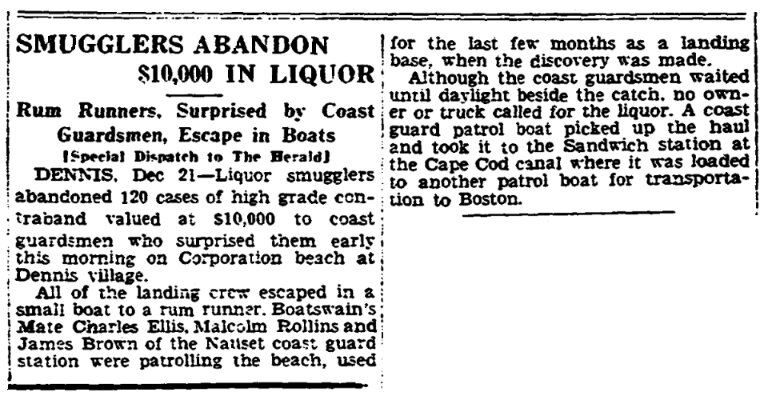
Below is a news clip from the Boston Herald entitled “Smugglers Abandon $10,000 in Liquor – Rum Runners, Surprised by Coast Guardsmen, Escape in Boats,” that describes the smugglers abandoning their 120 cases of high-grade contraband when the Coast Guard chased them off. In this bust the loot was left on Corporation Beach at Dennis Village instead of being dropped into the briny deep.
Word got out and local fishermen would be out dragging the Sound or the Bay hoping to dredge up a cash crop. One of these astute fishermen was Than Wixon of Dennis Port.
His daughters, Pauline Derick and Adelia (Wixon) West said they still have the boom Than used to drag the Sound, retrieving cases that had been thrown overboard.
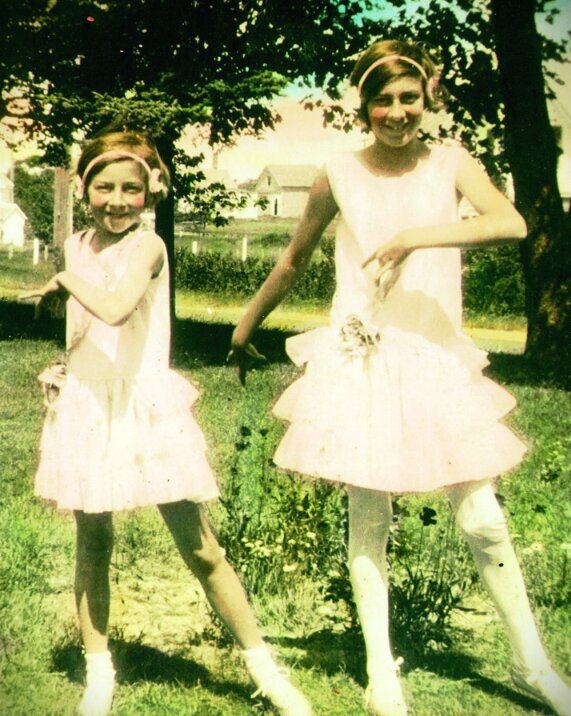
They remember being woken one night by the state police pounding on the door. They were trying to locate a crew that had been “surprised” unloading a cargo, abandoned the boat, and then taken refuge – somewhere.
Than offered no assistance to the police – after all, that crew was hiding in the cellar of his barn.
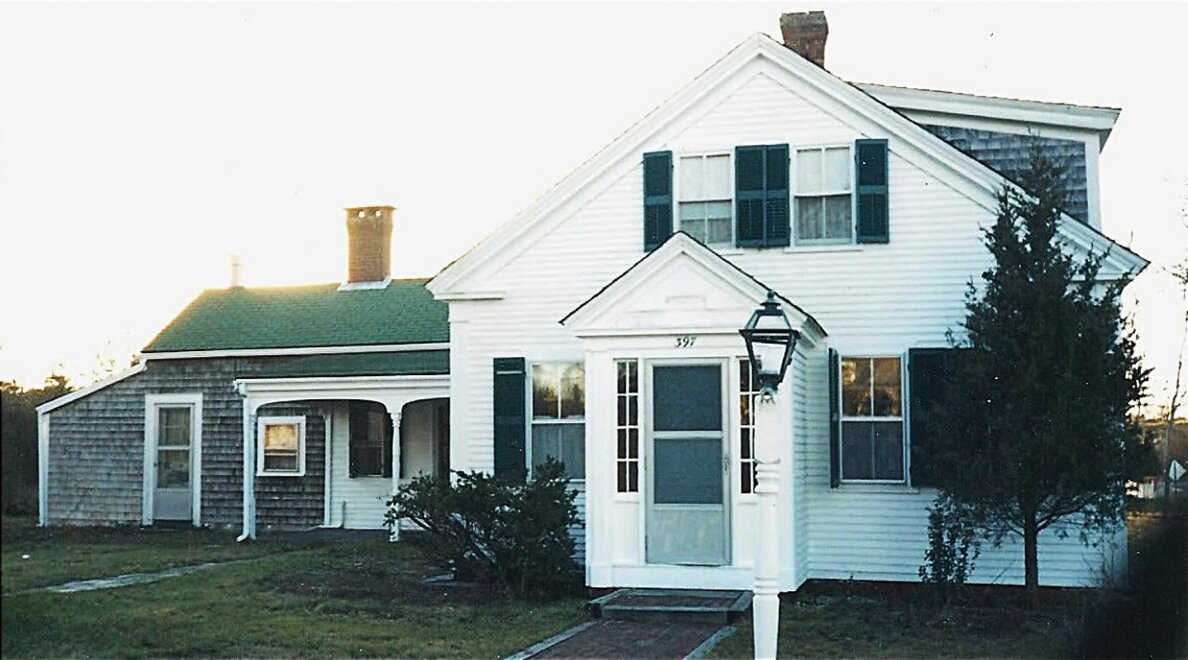
The next morning his wife, known to us as “Miss Marion,” scurried out to the barn with some hot coffee and baking powder biscuits, scared that someone would see her.
It seemed the crew was a bunch of young boys from Plymouth, one or two who lived next door to her uncle, a Plymouth policeman.
Than stored his “catch” in one of his summer rental cottages or in his barn cellar until he found a buyer, who was often Dr. John Peter Nickerson, son of John Wixon Nickerson and Mary A. (Howes) Nickerson of West Harwich (where the Friendly’s Restaurant on Rte. 28 is now).
Earl Blanchard Nickerson (1890-1952), son of Otis Clement Nickerson and Louise Kendrick (Sparrow) Nickerson of Dennis Port, fished quite often with Than and would sometimes take part of his pay in liquid form.
Going home with his “pay” in a wooden box, he would be on the lookout for Constable Benjamin Franklin Kendrick (1884-1875), son of Benjamin Wixon Kendrick and Emma (Chase) Kendrick, coming down Depot Street. Earl put the box down, sat on it, and whistled nonchalantly while Ben drove by.
Dr. Nickerson’s patients relied on him for their “supply” after local saloons shut down. Capt. John made a daily pilgrimage to Dr. Nickerson’s for another pint of “medication.” When houses were moved there were heaps of empty bottles under the floor.
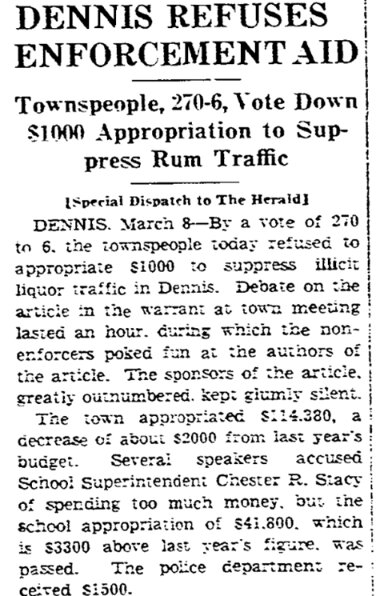
Even more telling – in 1932 Dennis voted 270-6 against an appropriation bill of $1,000 to suppress rum runners.
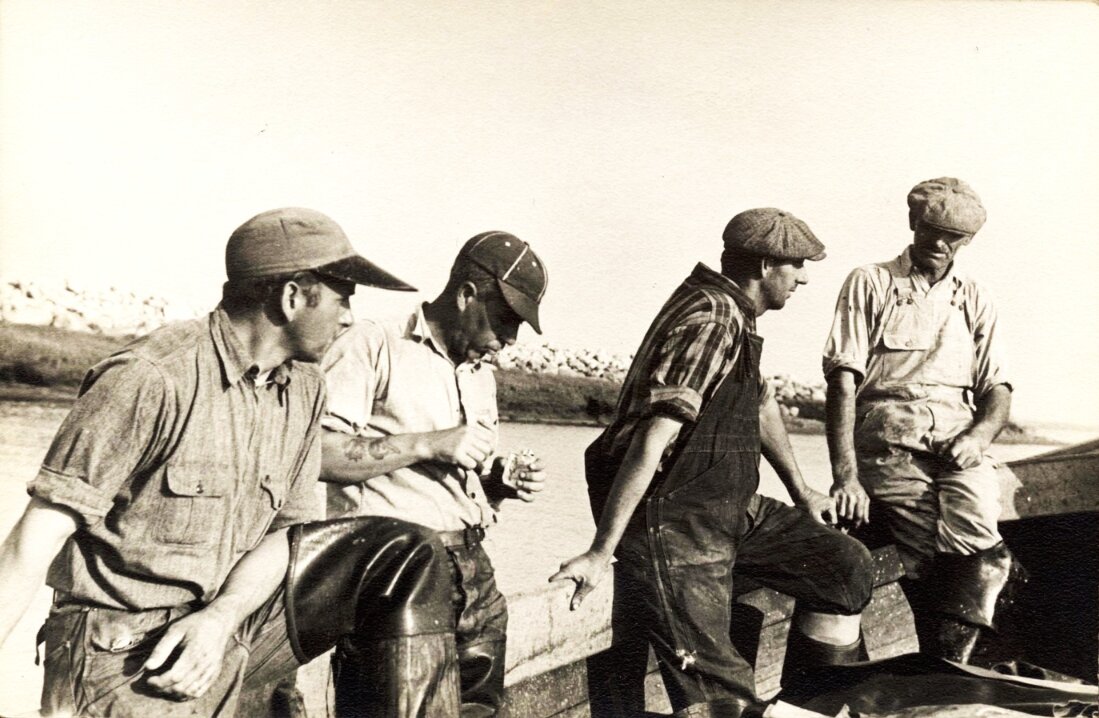
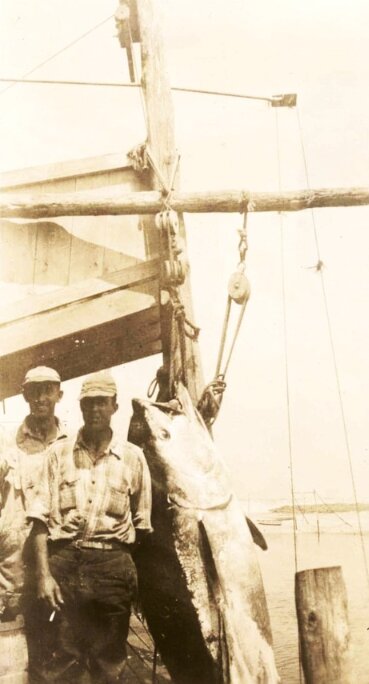
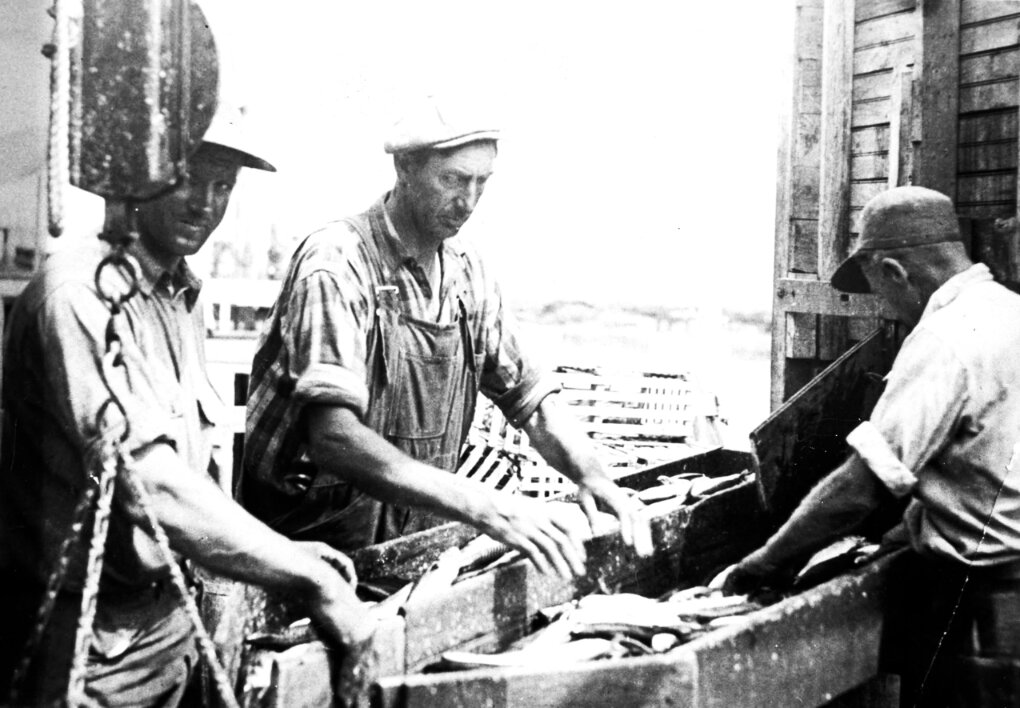
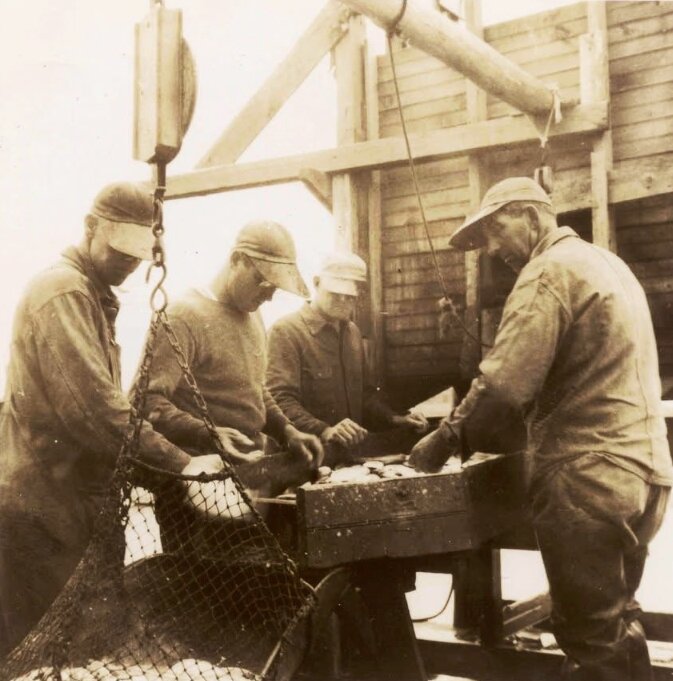
Below are four photos of Than with his crew of fellow fishermen. Some are kinfolk and all are Mayflower scions.
In this photo we see (left to right): Captain John Sears Garfield (1913-1952); Charles Herbert West (1906-1984); Nathaniel “Than” H. Wixon; and James Stanley Lapham (1884-1952).
Here we see: Nathaniel H. Wixon (left) and Ralph Freeman Cahoon (1914-1980).
In this photo we see (left to right): Captain John Sears Garfield; Nathaniel H. Wixon; and Sylvanus Clinton Cahoon (1909-1992).
Here we see (left to right): Albert “Bert” Paul Kelley; George Woodman; Rocky Eldredge; and Than Wixon.
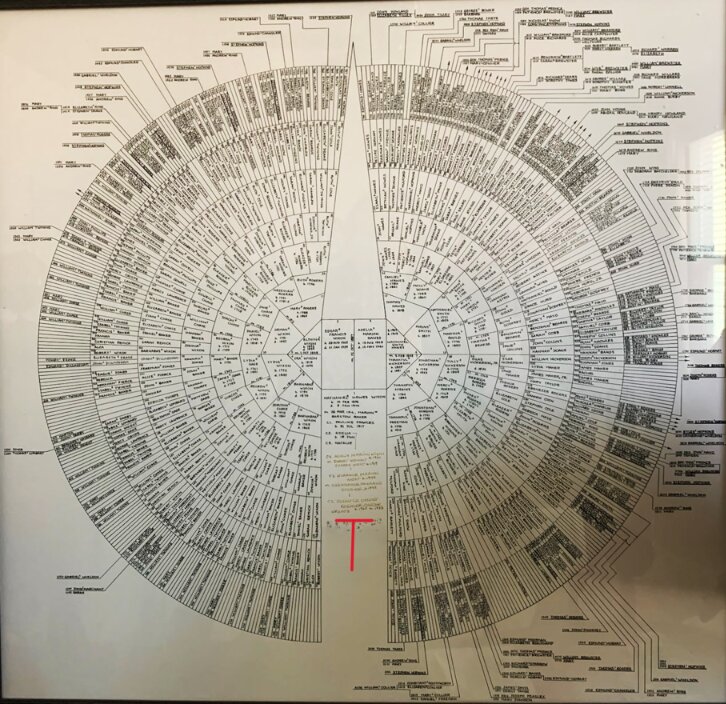
Here is the Wixon genealogy chart showing Mayflower lines.
More to come!
Create a free account at GenealogyBank for 7 days to start your journey and discover the stories your ancestors left behind.
Note on the header image: scenes from the Cape Cod fishing life. Credit: Jennifer (Koehler) Mackall.
Related Articles:
- Mayflower Descendants: Who’s Who, Part 35 (part 9)
- Mayflower Descendants: Who’s Who, Part 35 (part 10)
- Mayflower Descendants: Who’s Who, Part 35 (part 11)
- Mayflower Descendants: Who’s Who, Part 35 (part 12)
- Mayflower Descendants & the Mashpee Wampanoag Tribe (part 1)
- Mayflower Descendants & the Mashpee Wampanoag Tribe (part 2)
- Mayflower Descendants & the Mashpee Wampanoag Tribe (part 3)
- Mayflower Descendants & the Mashpee Wampanoag Tribe (part 4)
- Mayflower Descendants & the Mashpee Wampanoag Tribe (part 5)
- Mayflower Descendants & the Mashpee Wampanoag Tribe (part 6)
- Mayflower Descendants & the Mashpee Wampanoag Tribe (part 7)
- Mayflower Descendants & the Mashpee Wampanoag Tribe (part 8)
- Mayflower Descendants & the Mashpee Wampanoag Tribe (part 9)
- Mayflower Descendants & the Mashpee Wampanoag Tribe (part 10)
- Mayflower Descendants & the Mashpee Wampanoag Tribe (part 11)
- Richard Bourne: Missionary to Plymouth Colony Indians
- Thomas Tupper: Missionary to Plymouth Colony Indians
