
 September 17, 2026
Introduction: In this article, Melissa Davenport Berry provides more photos and genealogy of people found in New Bedford Public Library scrapbooks. Melissa is a genealogist who has a website, americana-archives.com, and a Facebook group, New England Family Genealogy and History.
For today’s article, I’m examining scrapbooks from the New Bedford Public Library collection in New Bedford, Massachusetts. Unless noted, all images are courtesy of the library, and some are enhanced AI. I utilized GenealogyBank for additional information on my subjects, including census records.
19th Century: ‘Ladies Chair’ of Old Whaling Days
This photo shows a “Ladies Chair,” or “Gamming Chair.” During the 19th century, many captains’ wives from New England took up residence on the whaling ships their husbands commanded. A “Gam” in sailors’ terms is a social, friendly visit between the crews of whalers.
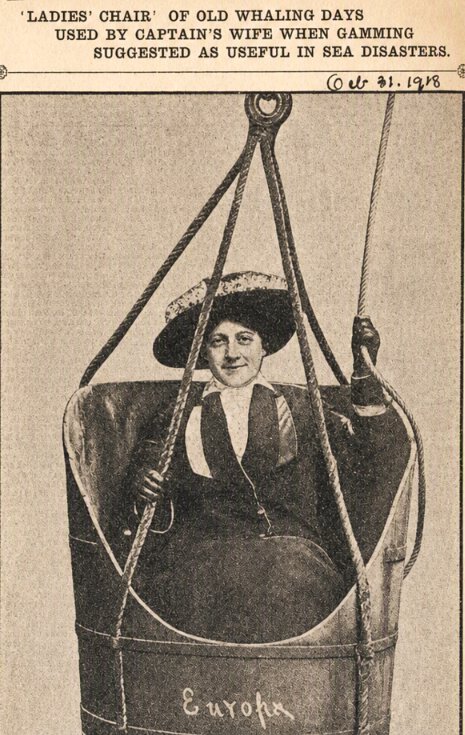
It is also suggested that this chair is useful in sea disasters. One example noted in “Gamming Chairs and Gimballed Beds: Seafaring Women on Board Nineteenth-Century Ships,” published in the Journal of Maritime Archaeology, Volume 12, Issue 1, pp. 71-90, April 2017, was Lucy Jane Lord Howes, wife of Captain Benjamin Perkins Howes, who disembarked in a gamming chair when captured by Confederates during the Civil War.
I found a newsclip which features a photo of one of these chairs.
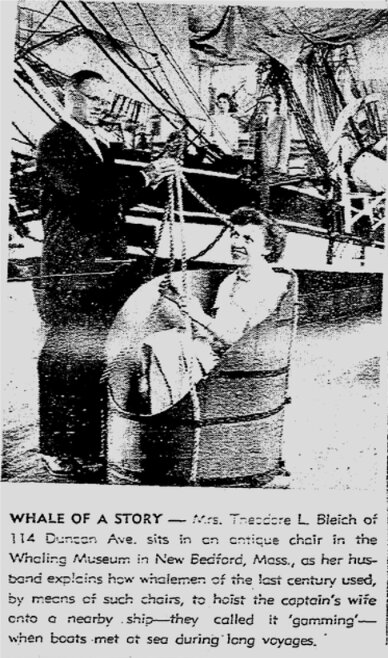
This photo caption reads:
Mrs. Theodore L. Bleich of 114 Duncan Ave. sits in an antique chair in the Whaling Museum in New Bedford, Mass., as her husband explains how whalemen of the last century used, by means of such chairs, to hoist the captain’s wife onto a nearby ship – they called it “gamming” – when boats met at sea during long voyages.
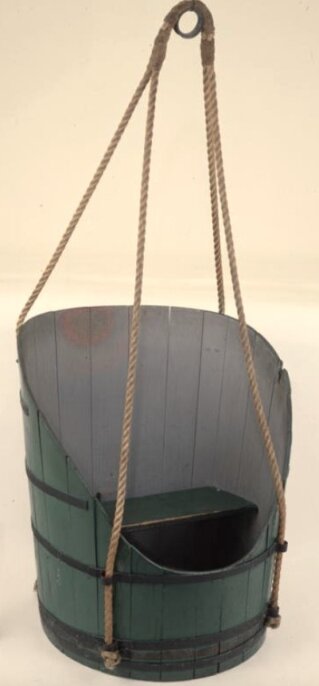
Below is a photo of this same gaming chair housed in the New Bedford Whaling Museum.
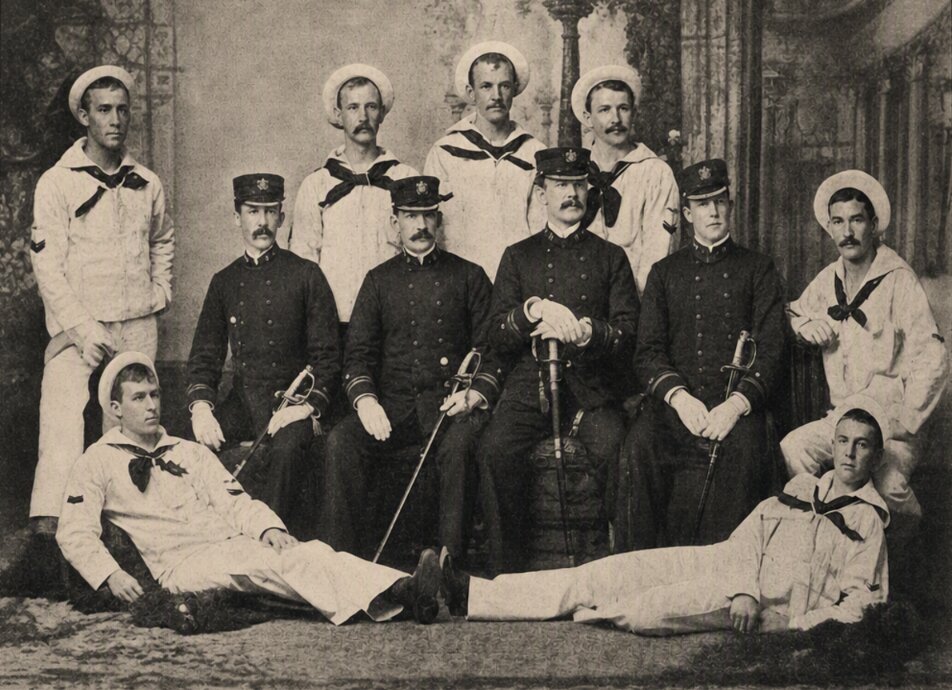
1893: Officers and Petty Officers of G Company Naval Brigade
This 1893 photograph was hung on the State Armory wall in 1916. It was presented by Fred Fish, superintendent of the glass department at the Pairpoint Corporation in New Bedford. He was an acting ensign at the time he appeared in the photo.
In this photo we see, left to right: (front row, lying down) William P. Briggs; Edward D. Morton; (middle row) Edward H. Cook; Albert R. Pierce; Lieutenant (J G) George N. Gardiner; Lieutenant Chief of the Company Homer M. Hervey; Ensign Fred Fish; H. J. Ricketson; (back row) William E. Kern; David G. F. Ward, J. Warren Braley.
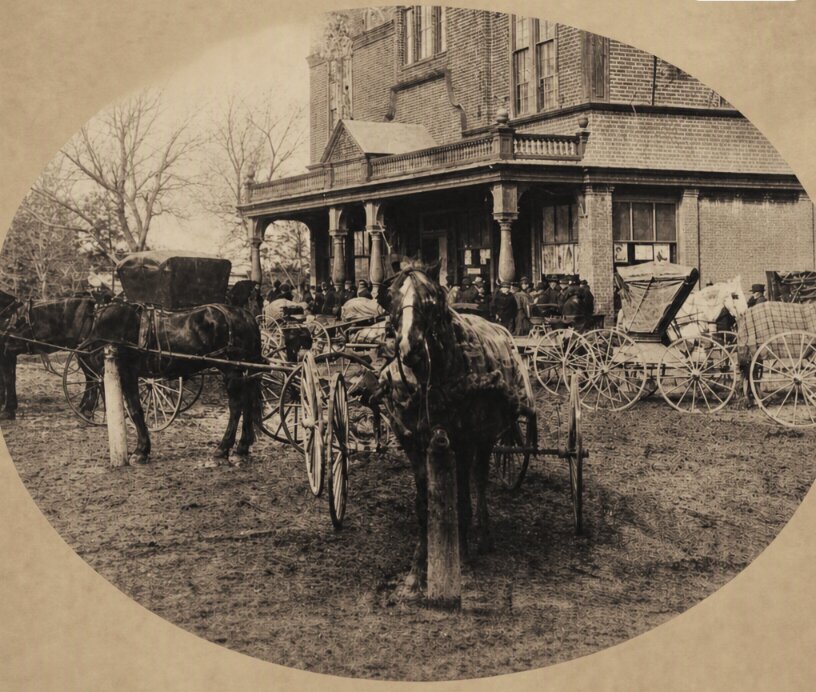
1894: Harwich Courthouse
This photo shows Harwich Courthouse in Harwich, Massachusetts, in 1894 during a busy drama day. Wonder who was on trial?
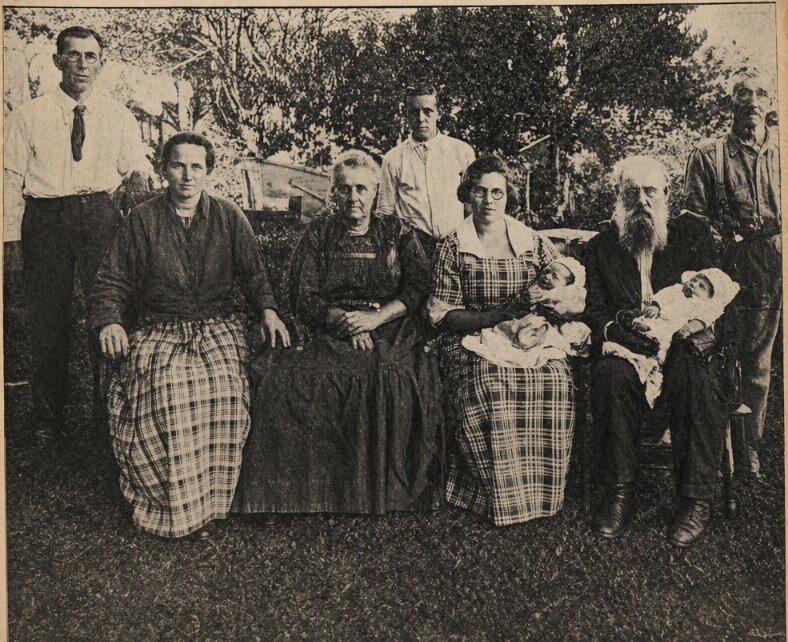
Five Generations of a Family in One Photo!
This remarkable photo shows five generations of a family from Freetown, Massachusetts, one of the oldest communities in the United States. Freetown was settled by the Pilgrims and their descendants in the latter half of the 17th century.
In this photo we see, from left to right: (standing) Chester Emund Cannon (1881-1962); his son Nelson Cannon (1907-1999); his father Rufus Henry Cannon (1851-1931); (sitting) Mrs. Chester Edmund Cannon (1887-1986), born Clara Augusta Staples, daughter of George Perley Staples and Lillian L. (Townsend) Staples; Mrs. Rufus Cannon; Mrs. George Clinton DeMaranville holding her son Robert A. Demoranville; Asa Spooner (1832-1924) holding baby Doris Irene Cannon.
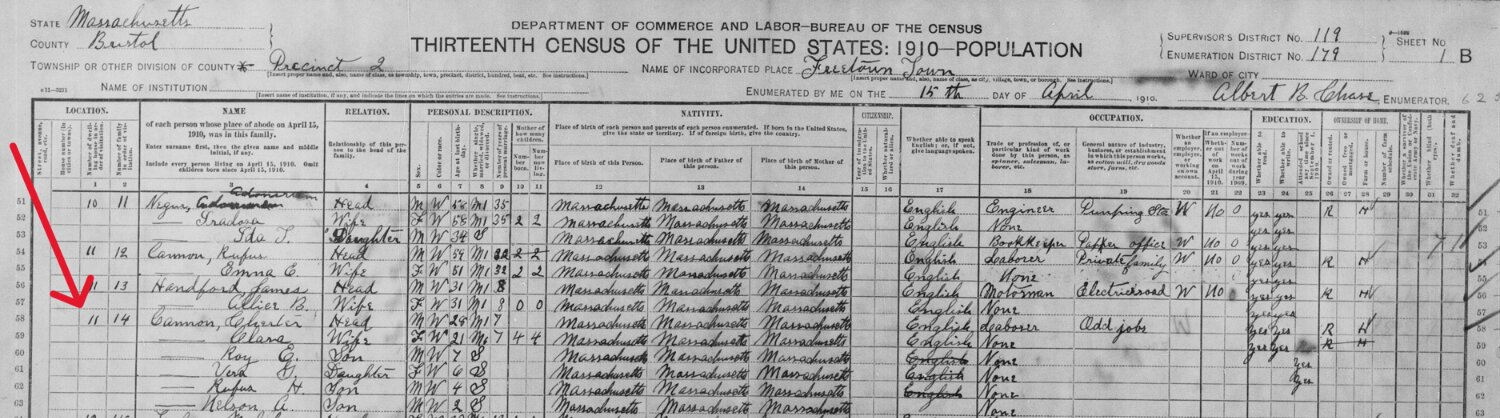
I found Chester Edmund Cannon is the 1910 census listed with his wife Clara and children Roy, Vera, Rufus, and Nelson. Living on the same street was his father Rufus H. Cannon and his wife Emma Elizabeth (Spooner) Cannon, daughter of Asa Spooner and Clarissa (DeMoronville) Spooner.
Here is a photo of Asa Spooner Jr. from the scrapbook collection, published when he died.
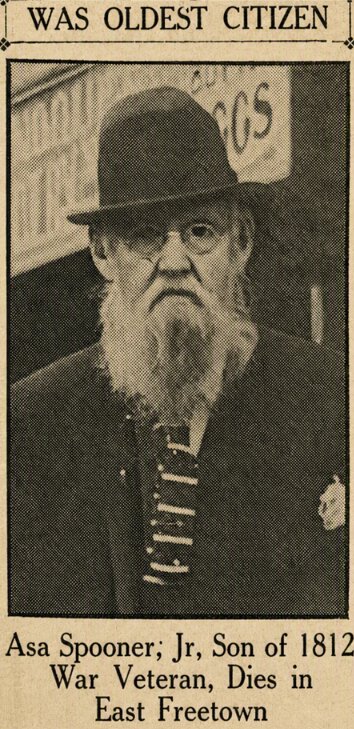
The obituary with this photo reads:
Asa Spooner, Jr., the oldest citizen of Freetown, died yesterday [15 July 1924] at the home of his daughter, Mrs. Rufus Cannon. Mr. Spooner was 92. He had been a life-long resident of Freetown.
Of a quiet and retiring disposition, Mr. Spooner never took an active part in town affairs. His friendly disposition made him many friends, and he was known by everyone in town. He was the son of a veteran of the War of 1812, and he served in the Civil War.
Mr. Spooner, in his younger life, followed the trade of ship building. He helped build several New Bedford whaleships. Later he was employed as a watchman at the Wamsutta Mills. He married Clarice Demoranville of this city. Besides his daughter, Mr. Spooner is survived by descendants extending to the fifth generation.
1921: Two Brothers Meet After 40 Years
In June of 1921 Valentine Ross, a British Columbia cattleman, arrived in New Bedford to visit his brother Ferdinand, whom he had not seen for more than 40 years. The brothers were separated as boys in Quebec, and Valentine’s unexpected arrival brought his brother great joy.
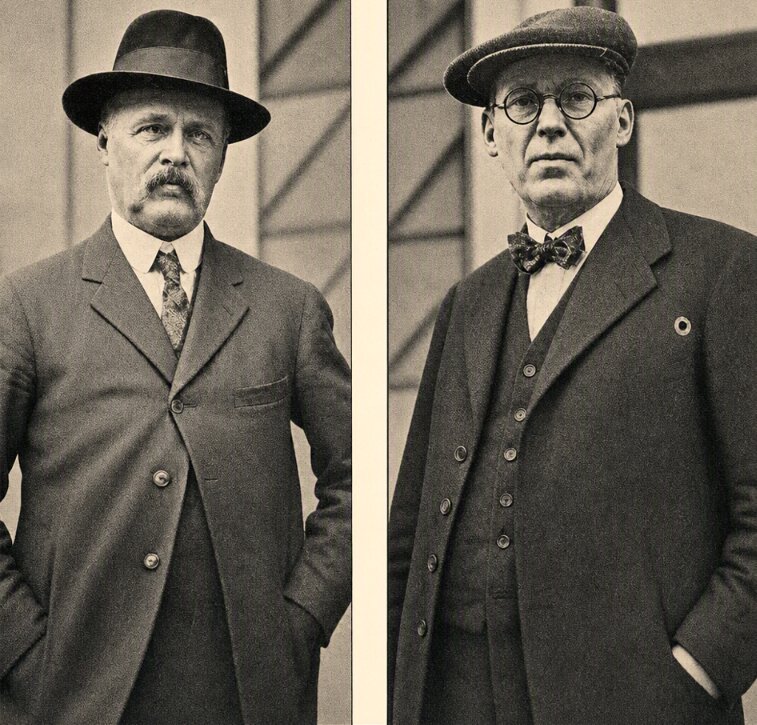
Ferdinand “Fred” Ross (1844-1944) and his brother Valentine (b. 1855) were born in Sainte-Flavie, Bas-Saint-Laurent Region, Québec, Canada, to Jean-Baptiste Ross and Hermine (Guimond) Ross.
Ferdinand married Anna Morin Dite Valcourt (1859-1945) and had several children, leaving many descendants. According to the census, in 1920 he lived on Sawyer Road in New Bedford, and his occupation was a “real estate dealer.”
1930: The Weaver’s Corner at Smith Mills
In this photo taken in 1930, Elizabeth Bullard Goodwin (1919-2013) reenacts working at the loom in the historic section of Dartmouth, Massachusetts, known as Smith Mills.
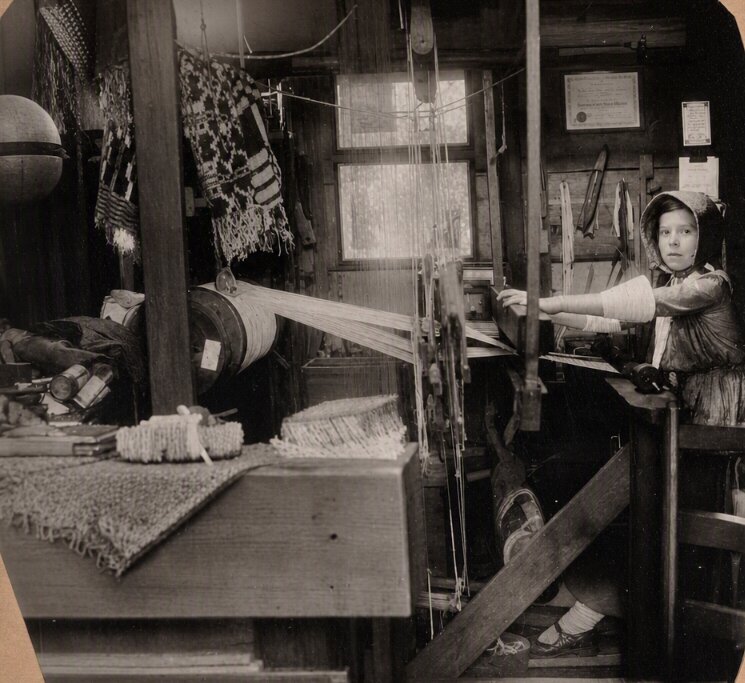
Elizabeth is the daughter of Harry Samuel Goodwin and Marion Bullard (Healey) Goodwin. She married two men with whom she had children: 1st Norman John Mee and 2nd Robert Cormier.
Smith Mills became a bustling village settled around the water-powered grist, fulling, and sawmill operations. Henry Tucker and George Babcock built the first grist mill here after 1664.
In 1706, Elisha Smith acquired Tucker and Babcock’s farm and mill property and built a sawmill there. The Smith family controlled the mills for more than a century, giving Smith Mills its name. Inns and taverns served travelers at the crossroads, while millers, textile merchants, linseed oil manufacturers, cobblers, blacksmiths, carpenters, and farmers supported the village economy. The late-19th-century expansion of the railroad improved access to New Bedford and the rest of Massachusetts.
By 1889, Smith Mills included a post office, School No. 10, a Christian Baptist church, and two Quaker meetinghouses. Family farms and forests surrounded the village during the horse-and-carriage era.
More to come…
Create a free account at GenealogyBank for 7 days to start your journey and discover the stories your ancestors left behind.
Note on the header image: North Water Street in New Bedford, Massachusetts, part of the New Bedford Historic District, a U.S. National Historic Landmark District. Credit: Daniel Case; Wikimedia Commons.
Related Article:
